
At its core, shapewear is all about targeted compression. Think of it less like squeezing and more like a gentle, strategic hug for your body. It smooths, sculpts, and redistributes soft tissue to create that sleek, streamlined silhouette you want under your favorite outfits. It’s a modern tool designed to support and enhance your natural shape.
Unpacking the Magic of Compression and Contouring
Ever wonder what’s really going on when you slip into a great piece of shapewear? The secret isn’t just tight fabric. It’s a sophisticated blend of advanced materials, targeted pressure, and smart design all working together to create that polished, put-together feeling.
This idea has been around for a while, though thankfully, the technology has come a long way. Today's shapewear is the modern evolution of the girdles that were incredibly popular in the 1940s. Back then, an estimated 70% of American women wore them to get the defined waists that post-WWII fashion demanded. You can learn more about the evolution of the shapewear market on GrandViewResearch.com.
While the goal is still a smoother finish, the experience is worlds apart. We've traded stiff, restrictive materials for incredible elastic blends that move with you, not against you.
This does more than just enhance your figure; it has a surprisingly powerful effect on your mindset. That feeling of being securely held and supported can give you a major confidence boost. We explore this in detail in our article on the secret psychological power of shapewear.
To really get it, you just need to understand the three key things your shapewear is doing for you: compression, smoothing, and support. These three elements work in perfect harmony to refine your silhouette.
The table below breaks it all down, giving you a quick snapshot of the science behind the shape.
Shapewear's Core Mechanisms at a Glance
| Mechanism | How It Works | What You See & Feel |
|---|---|---|
| Compression | Uses smart, elastic fabrics to gently compact soft tissue in key zones like your tummy, hips, and thighs. | A visibly slimmer, more toned look where you want it most. |
| Smoothing | Creates a flawless foundation by minimizing lines from underwear and contouring bumps and bulges. | A seamless, smooth finish under even the trickiest fabrics like silk or jersey knit. |
| Support | Provides gentle structural reinforcement, especially around your core and lower back. | Better posture and a feeling of being comfortably held in and secure all day long. |
When these three mechanisms come together in a well-designed garment, the result is a look that feels as good as it looks—effortless, polished, and confident.
The Science of Compression and Contouring
Ever wonder what the "magic" behind shapewear really is? It's not about squeezing you into a smaller size. Instead, it’s all about the smart science of compression—gently and strategically applying pressure to smooth and redistribute soft tissue. The goal is a beautifully contoured silhouette, not a drastic change.
Think of it like the pressure in a swimming pool. It’s stronger in the deep end and much lighter near the surface. The best shapewear uses a similar idea called graduated compression. This clever design applies firm control where you need it most (like your tummy) and eases up at the edges. This is key to preventing that dreaded "bulge" where the garment ends and ensures it feels comfortable all day long.
This gentle repositioning of soft tissue is what creates that seamless, smooth line under your clothes. It doesn't make anything disappear; it simply molds your natural curves into a more streamlined shape.
More Than Just Aesthetics
Beyond creating that flawless foundation for your outfits, this compression offers some real biomechanical perks. The targeted support around your core can actually encourage better posture. It acts as a subtle reminder to engage your core muscles and sit a little straighter—a huge plus for anyone who spends their days at a desk.
These principles aren't new; they're borrowed from medical-grade garments, which have used compression since the 1950s to help with post-surgery recovery and improve circulation. For instance, many shaping bodysuits apply 20-30 mmHg of pressure, which can help reduce bloating and enhance muscle definition. Some studies even suggest that mid-level control shapewear can lead to a 12% reduction in lower back strain for people who wear it daily. You can read more about the foundations of the body shapewear market at Gminsights.com.
This little guide breaks it down perfectly, showing how compression creates both a smooth look and functional support.
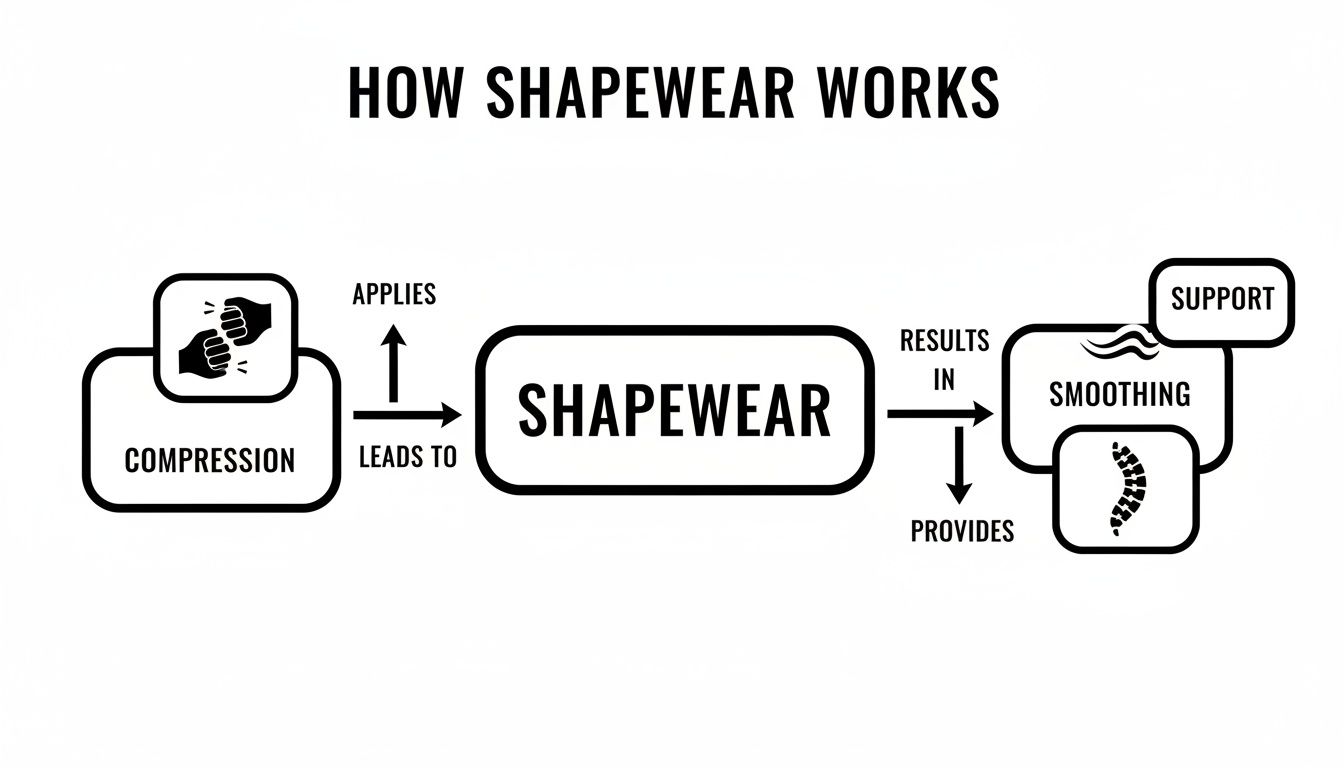
As you can see, it all starts with compression, which leads to smoothing your silhouette while also giving your core that supportive hug.
The Physics of a Flawless Fit
How well any piece of shapewear works comes down to how it manages this pressure. A thoughtfully designed garment moves with your body, keeping the pressure consistent without pinching, rolling down, or digging in. For example, a quality waist trimmer shapewear piece uses this science to focus firm, comfortable control right where you want it most.
Once you understand that shapewear is engineered to redistribute, not reduce, you can truly appreciate its purpose. It's a supportive base layer designed to help your clothes drape beautifully, enhancing your natural shape. It's a tool for confidence, not alteration.
Decoding the Design: Fabrics and Construction
The real magic of shapewear isn't just about squeezing you in; it's about intelligent design. The science of compression only comes to life when the materials and construction are up to the task. It's the clever engineering woven into every fiber that turns a simple garment into a sophisticated sculpting tool, and it’s the difference between a piece that smooths and one that just feels tight.
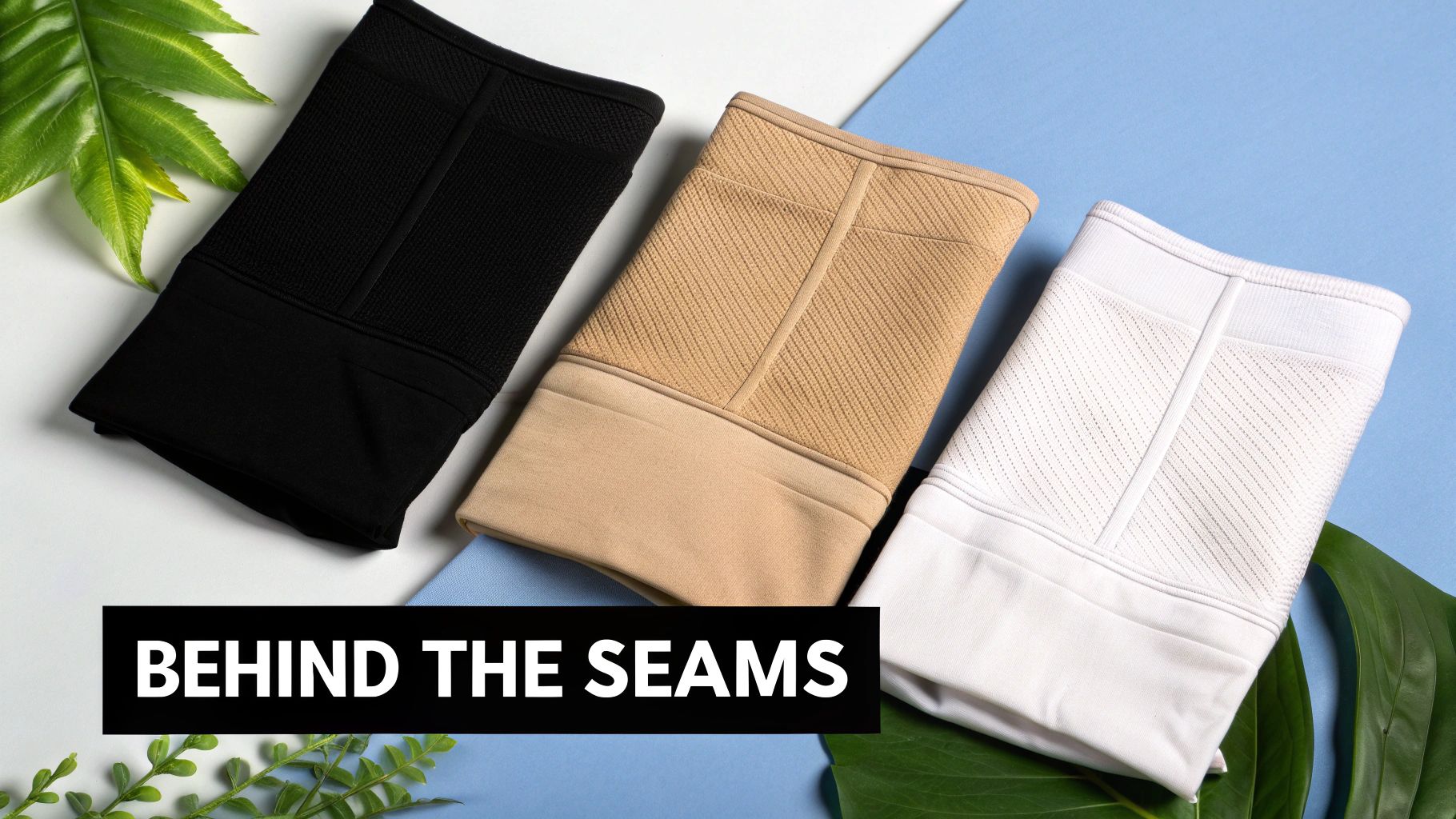
It all starts with the fabric. Most modern shapewear relies on a precise blend of synthetic fibers, usually nylon and spandex (you might also see it called elastane or Lycra). Think of nylon as the soft, durable, and lightweight base, while spandex delivers that critical, powerful stretch. This combination is what allows the garment to mold perfectly to your body, giving you firm control without making you feel trapped.
This blend is what makes it all possible, with high-elasticity fabrics using a 15-25% elastane blend to smooth and support. This tech has come a long way since the 1970s, when Lycra first offered 300% more stretch than old-school rubber, completely changing the game for undergarments. Today, popular styles like shaping leggings and briefs make up 40% of the market—a huge nod to how effective this fabric science is. You can find more great insights into the shapewear market on Market.us.
The Blueprint of a Perfect Fit
Beyond the fabric, the construction is where the true artistry comes in. Designers use a handful of key techniques to make sure shapewear performs exactly as it should, targeting specific areas with precision while preventing those all-too-common annoyances like rolling or pinching.
These thoughtful design elements are what separate high-quality shapewear from the rest, turning a simple piece of fabric into a reliable foundation for any outfit.
-
Seamless Knitting: This is how you get that buttery-smooth finish. This technique eliminates bulky seams that could peek through form-fitting clothes, making it essential for an invisible look under slinky dresses or tailored pants.
-
Targeted Compression Panels: These are the real workhorses of any shaping garment. Designers weave tighter, more powerful zones of fabric into key areas—like the lower abdomen, hips, or outer thighs—to provide focused control right where you want it most.
-
Flexible Boning: You'll find this in more structured pieces like waist cinchers. Flexible plastic or steel boning offers extra postural support and shaping. It helps the garment keep its structure, preventing it from bunching up or rolling down at the waist.
-
Silicone Grips: A simple but brilliant feature. These thin strips of silicone are placed along the waistband or leg openings to create a gentle "stick" to your skin. This ensures the shapewear stays perfectly in place all day long, preventing slippage in an estimated 98% of cases.
The best shapewear isn’t just about tight fabric; it’s an intelligently designed system. Every panel, seam, and grip works together to sculpt, smooth, and support your body comfortably and invisibly.
Choosing Your Perfect Shapewear Piece
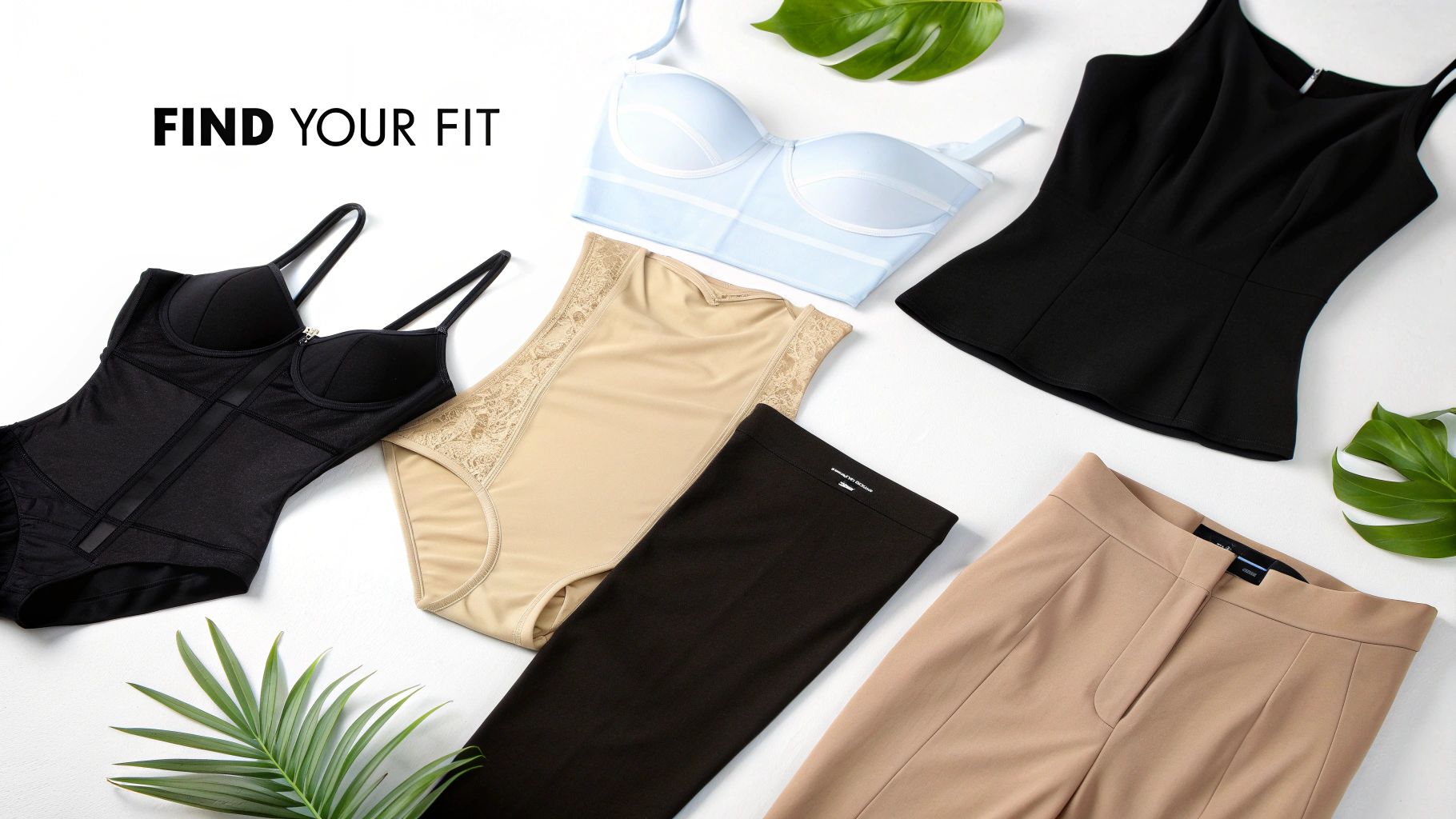
Alright, now that we've pulled back the curtain on how shapewear works its magic, let's get to the fun part: finding the perfect piece for you. Walking into the world of shapewear can feel a little overwhelming with all the different styles and options. But don't worry, it's simpler than it looks.
The secret is matching the garment’s design and compression level to what you're wearing and the look you want to achieve. Not all shapewear is the same, and knowing the difference is key to avoiding those common frustrations—like picking a piece that’s way too much for a casual Tuesday or not nearly enough for that big event.
Finding Your Ideal Compression Level
Think of compression as the "power" level of your shapewear. The level you pick directly affects how the garment feels and the results you'll see. It generally breaks down into three tiers.
-
Light Control: This is your best friend for everyday wear. It gives you a gentle, comfortable hug that smooths out minor lines and bumps without ever feeling restrictive. It's the perfect choice for all-day comfort under t-shirts, casual dresses, and jeans.
-
Medium Control: Ready to step up the shaping? This level provides more noticeable contouring and firm support for your tummy, waist, and hips. It’s ideal for workwear, pencil skirts, or anything where you want a little extra definition. It's firm, but still comfortable enough to wear for hours.
-
Firm Control: When you want maximum sculpting for a special occasion, this is your go-to. Firm control delivers serious contouring for a dramatically defined silhouette. It's the ultimate partner for bodycon dresses, formal gowns, and sharp, tailored suits.
Choosing the right compression level is really about being honest with yourself. What do you need? What will you be comfortable in? The goal is to feel confident and supported, not squeezed.
Matching the Style to Your Outfit
Once you’ve got your compression level figured out, it's time to pick a style that targets the right areas and—most importantly—stays completely invisible under your clothes. Every shapewear design has a specific job, whether it's smoothing your thighs or defining your waist. Getting this pairing right is the final step to a flawless finish.
A high-waisted shaping short, for example, is brilliant for creating a smooth line under trousers or a jumpsuit. A full bodysuit is a game-changer for fitted dresses, ensuring a seamless silhouette from bust to hip. Making the right match ensures your shapewear is working with your clothes, not against them. A great place to start is by exploring a well-rounded shapewear collection to see how different styles are built for different outfits.
Which Shapewear Style Is Right for You?
To make it even easier, I've put together a simple guide to the most common shapewear types. This will help you pinpoint the best option for just about any outfit or occasion.
| Shapewear Type | Primary Target Area | Best For Wearing Under | Compression Level |
|---|---|---|---|
| Shaping Briefs | Lower Abdomen & Hips | High-waisted pants, skirts | Light to Medium |
| Shaping Shorts | Tummy, Hips, & Thighs | Trousers, midi dresses, jumpsuits | Medium to Firm |
| Bodysuit | Torso, Waist, & Hips | Fitted dresses, blouses, jumpsuits | Medium to Firm |
| Camisole | Upper Torso & Back | Blouses, knits, fitted tops | Light to Medium |
| Full Slip | Full Body (Bust to Thighs) | Bodycon dresses, formal gowns | Medium to Firm |
| Waist Cincher | Midsection & Waist | Tailored suits, evening wear | Firm |
Ultimately, the right shapewear is the piece that makes you forget you're even wearing it. It should feel like a supportive second skin that lets you step out the door feeling secure, polished, and ready for anything.
Wearing Shapewear Safely and Comfortably
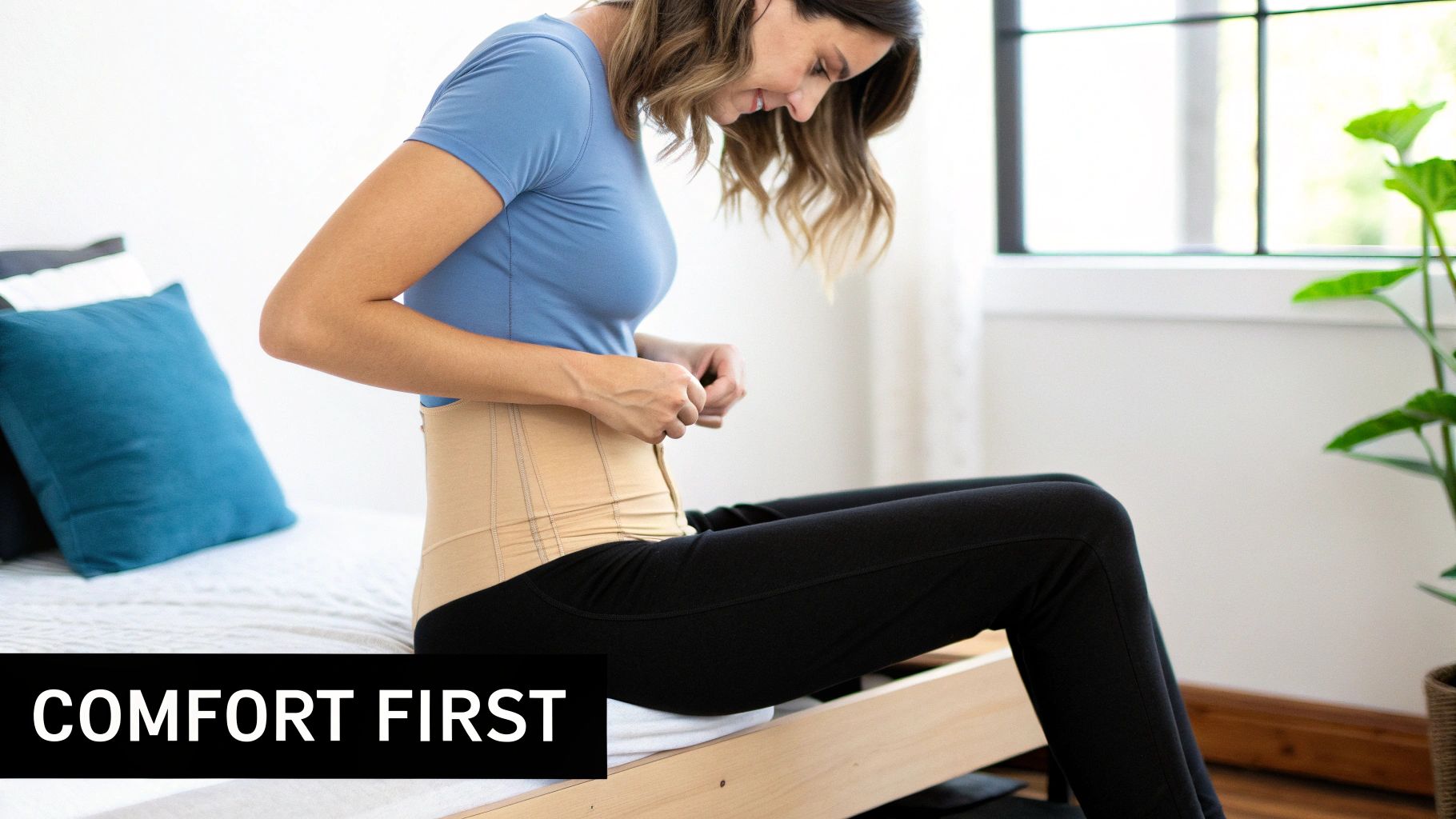
Understanding how shapewear works is one thing, but wearing it correctly is the secret to unlocking its confidence-boosting magic without sacrificing your well-being. The single biggest mistake we see? Thinking that a smaller size will deliver more dramatic results.
In reality, sizing down is the fastest way to feel uncomfortable. It leads to bulging, digging, and can even make it hard to breathe. The whole point is to feel supported and gently smoothed—not squeezed into submission.
A proper fit should make you feel secure, but you should also be able to forget you’re even wearing it. If you find yourself constantly tugging or adjusting your garment throughout the day, that’s your body telling you the fit or style isn't quite right.
Best Practices for a Better Fit
To make sure your shapewear experience is a positive one, there are a few golden rules. First and foremost, always listen to your body. Your garment should never cause actual pain, numbness, or that pins-and-needles feeling. Those are major red flags that the compression is too tight and might be messing with your circulation.
It's also a good idea to give your body a break. While many modern pieces are designed for all-day wear, you should avoid wearing firm or extra-firm control shapewear for super long stretches. And definitely never sleep in your shapewear. Your body needs that downtime to rest and recover without any compression.
Here are a few pro tips to get it right every time:
- Step Into It: This sounds weird for tops, but it works! Always step into your shapewear, even camisoles or bodysuits. Bunch up the fabric like you would a pair of tights and gently pull it up, letting it settle into place naturally without yanking.
- Check for Rolling or Pinching: The edges—the waistband, the leg openings—should lie flat against your skin. If the top rolls down or the leg bands cut into your thighs, you probably need a different size or a style with a silicone grip to hold it in place.
- The Breath Test: Take a deep, full breath. Can you do it easily? You should be able to breathe comfortably from your diaphragm without feeling like you're being restricted.
Think of a well-fitting piece of shapewear as your secret support system. It's there to make you feel polished and secure, but it should never be distracting. Discomfort is always a sign to reassess your size or style.
Signs of an Improper Fit
Knowing the warning signs of a bad fit can save you from a day of misery. Pay attention to how your body feels, not just how it looks in the mirror. Great shapewear should move with you, providing a flexible, supportive hug that works with your natural curves.
If you experience any of the following, it’s time to take it off and rethink your choice:
- Sharp pinching or chafing, especially along seams or edges.
- Numbness or a "tingling" sensation anywhere.
- Any difficulty taking a full, deep breath.
- Angry red marks or deep indentations on your skin after you take it off.
Choosing the right garment is all about celebrating and supporting your shape, not fighting against it. When you make comfort and a proper fit your top priorities, shapewear becomes a powerful and positive part of your wardrobe.
Keeping Your Shapewear in Top Shape
Think of your favorite shapewear piece as a high-performance investment. To keep it smoothing, sculpting, and supporting you perfectly over time, a little TLC is non-negotiable. If you neglect its care, those delicate elastic fibers that do all the hard work will start to break down.
The magic behind great shapewear is usually a special blend of spandex and nylon, and this fabric has one major enemy: high heat. Exposing it to heat can permanently damage its elasticity, leaving you with a garment that’s lost its supportive power and shape.
Your Guide to Washing and Drying
Always, always be gentle. While hand-washing is the absolute best way to protect the fabric's integrity, we get that life is busy. You can use a machine, but only if you follow the rules.
-
The Hand-Wash Way: Fill a basin with cool water and add a touch of mild, alcohol-free detergent. Gently squeeze the soapy water through the garment—never twist or wring it out, as that can stretch the fibers permanently. Rinse it out with cool water until it runs clear.
-
The Machine-Wash Way: This is crucial: always tuck your shapewear into a mesh lingerie bag to keep it from snagging on zippers or buttons. Set your machine to the delicate cycle using cold water only and a gentle detergent.
Once it's clean, never even think about putting your shapewear in the dryer. That intense heat will absolutely destroy the elastic. Instead, gently roll the garment up in a clean towel and press down to soak up any extra water.
If you remember just one thing, let it be this: always air-dry your shapewear. Lay it flat on a rack or hang it up, but keep it out of direct heat or sunlight. This single step is the secret to protecting your investment and making sure it performs for you again and again.
Got Questions? Let's Talk Shapewear.
Even with the science down, you probably have a few real-world questions buzzing around. It's totally normal! Think of this as our little sit-down chat to clear up the most common curiosities, so you can feel 100% confident before you even slip your shapewear on.
Can You Really Wear Shapewear Every Day?
Yes, you absolutely can—as long as you choose the right piece for the job. For daily wear, you’ll want to stick with light or medium compression styles. These are your go-to garments for gentle smoothing and a little bit of support that feels comfortable, not restrictive. They’re perfect for creating that seamless base under your work clothes or weekend outfits.
A quick tip from experience: save the firm and extra-firm control for those special occasions where you want that extra "wow" factor. The most important thing is to listen to your body. If you ever feel discomfort, that's your cue to take a break.
So, Does Shapewear Actually Make You Lose Weight?
This is one of the biggest myths out there, so let's clear it up. Shapewear is a master of illusion—it creates a temporarily smoother, more streamlined silhouette by compressing and redistributing soft tissue. But it does not cause permanent weight or fat loss. The incredible effect you see is purely cosmetic and only lasts as long as you're wearing it.
Think of it as your favorite styling tool, not a weight loss plan. Its real job is to enhance your natural shape under your clothes, giving you an instant confidence boost by creating a flawless foundation to build your outfit on.
Lasting changes to your body shape come from the hard work you put in through diet, exercise, and a healthy lifestyle. Shapewear is just here to help you celebrate that body, right now.
How Do I Stop My Shapewear From Rolling Down?
Ugh, the dreaded roll-down! It’s one of the most frustrating things that can happen, but trust me, it’s almost always preventable. A rolling waistband is a huge sign that either the fit is off or you've picked the wrong style for your unique shape.
Here are a few game-changing fixes:
- Double-Check Your Size: Nine times out of ten, rolling happens because the garment is too small. When it's too tight, the fabric is pulled under too much tension and will naturally try to roll down to a narrower part of your body.
- Look for Silicone Grips: High-quality shapewear almost always has a secret weapon: a thin silicone strip along the top hem. This little detail helps the garment gently grip your skin and stay exactly where you put it. No slipping, no rolling.
- Go for a High-Waisted Style: A piece that extends all the way up to your bra line—like a high-waist brief or short—has much more surface area to anchor itself. It's far less likely to budge or roll down throughout the day.
By keeping these little tips in mind, you can see how shapewear works as a powerful, reliable tool in your wardrobe—not a frustrating one!
Ready to find the perfect piece that feels as good as it looks? Explore the entire collection at Snatch Store US and discover confidence-boosting styles designed for every body and every occasion. Find your perfect fit today!
Article created using Outrank
0 comments