
So, you've heard about waist trainers, but what are they really for? Let's clear up the confusion.
At its heart, a waist trainer is a high-compression garment you wear around your midsection. Its main job is to give you an instantly slimmer, more defined waistline the moment you put it on. By firmly hugging your torso, it creates that coveted hourglass silhouette and, as a bonus, provides some serious back and posture support.
What Exactly Is a Waist Trainer and How Does It Work?

Think of a waist trainer as a modern, more flexible take on a corset. It’s typically made from powerful materials like latex or neoprene that are strong enough to hold you in but still allow you to move.
The magic is all in the mechanics. When you wrap it around your torso, the firm compression immediately cinches your waist, smoothing your midsection and accentuating the curve from your ribs to your hips. This gives your clothes a flawless foundation to drape over.
While this stunning transformation is temporary (it only lasts as long as you're wearing it), the benefits often go beyond just aesthetics. Many of our customers tell us the rigid-yet-flexible structure is a game-changer for their posture, gently reminding them to sit and stand tall.
The Core Functions Explained
Waist trainers are all about body shaping. They compress your midsection to create that cinched-waist look that’s become so popular. In fact, fueled by social media and fitness trends, the global market for waist trainers soared to around $1.2 billion in 2023.
The concept is simple but incredibly effective, focusing on three key benefits:
- Instant Silhouette Shaping: The garment physically molds your waist and tummy, giving you that smooth, defined hourglass figure under any outfit.
- Postural Support: The trainer’s structure acts like an external reminder to keep your back straight, encouraging better posture whether you're at your desk or on your feet all day.
- Workout Enhancement: When worn during a workout, certain materials like neoprene can ramp up the thermal activity around your core. This basically means you'll sweat more in that specific area.
A waist trainer isn't a magic wand for fat loss or a tool to permanently change your body shape. Think of it as a temporary shaping assistant—just like your favorite pair of smoothing briefs—that enhances your natural curves and supports your posture when you need it.
Primary Uses of a Waist Trainer at a Glance
To make it even clearer, here’s a quick breakdown of why people love using waist trainers. This table sums up the main purposes and benefits, helping you see exactly how it might fit into your life.
| Primary Use | How It Works | Best For |
|---|---|---|
| Instant Shaping | Provides 360-degree compression to smooth and cinch the waistline. | Creating a defined hourglass silhouette under special occasion outfits or everyday clothes. |
| Posture Correction | The firm structure supports the spine and encourages an upright position. | Individuals who slouch at a desk or want to feel more poised and confident. |
| Workout Support | Increases core temperature to promote sweating during exercise. | Enhancing a workout session and providing core support during certain exercises. |
| Postpartum Support | Offers gentle compression to the abdominal area after childbirth. | New mothers looking for extra support for their core and back muscles (with a doctor's approval). |
Ultimately, a waist trainer is a versatile tool. Whether you're looking for that perfect silhouette for a night out or a little extra support at the gym, it's designed to help you feel secure and confident from the inside out.
Understanding how these garments actually function is the key to having the right expectations. For a deeper dive into the science of compression, check out our guide on how shapewear works. It's all about temporary enhancement, not permanent change.
The 4 Main Reasons Women Wear Waist Trainers

So, beyond the basics, what are waist trainers actually for in the real world? Their versatility is probably their biggest strength, making them a fit for so many different lifestyles and goals.
Understanding these core uses helps you see how one simple garment can offer a whole host of benefits, from a quick confidence boost for a night out to practical, everyday support. A waist trainer isn't a one-trick pony; it’s a tool with four main jobs, each using the garment's compression and structure in a unique way.
1. That Instant Hourglass Shape
Let’s be honest—this is the most immediate and popular reason women reach for a waist trainer. Think of it as your secret weapon for creating a flawless foundation under any outfit.
The second you fasten it, the firm compression gets to work cinching your midsection, smoothing your tummy, and defining your waistline. This creates that classic hourglass silhouette, which makes everything from a slinky dress to a simple t-shirt and jeans just hang better. It’s an incredible confidence booster for special events like weddings or big parties, helping you look and feel like a showstopper.
While waist trainers are amazing for this, you can also explore our guide to the best tummy control shapewear to see how other styles compare for different needs.
2. Better Posture and Back Support
Between desk jobs and endless screen time, it feels like almost everyone is fighting the slouch. A waist trainer can act as a gentle, external reminder to stand tall and proud.
The semi-rigid structure of the garment guides your torso into a more upright position, making it a lot harder to slump over your keyboard. This constant little nudge to sit and stand straighter can help take some of the strain off your back muscles, which often helps ease the aches and pains that come with bad posture. Many of our customers tell us this support is a lifesaver during long days of sitting or standing.
A waist trainer gives you a physical cue to engage your core and keep your spine aligned. It’s not a medical brace, but it’s a supportive accessory that encourages mindful posture so you can carry yourself with more poise.
3. A Boost for Your Workouts
If you’re a fitness lover, a waist trainer can be a fantastic addition to your gym bag. When worn during exercise, trainers made from materials like neoprene are designed to ramp up the thermal activity around your core.
This process is called thermogenesis, and it basically just means you sweat more around your midsection. While this doesn't melt fat on its own, the extra perspiration can help you shed temporary water weight, making you feel like you had an even more effective workout. Plus, the firm compression provides great core support during exercises like squats, reminding you to keep your form tight and right.
4. Gentle Support for New Moms
The postpartum period is such a delicate time of recovery, and many new mothers are looking for a little extra support as their bodies heal. After getting the green light from a doctor, a waist trainer can offer some much-needed comfort.
It provides gentle compression to the abdominal area, which can feel incredibly supportive as your muscles and organs realign after childbirth. This soft "hug" around the middle also offers welcome back support, helping to ease the strain that comes with lifting, carrying, and caring for a newborn.
From Corsets to Modern Shapewear: The Evolution of Waist Training
The desire for a beautifully defined waist isn't just a recent trend—it's an idea with a history that stretches back centuries, long before the modern waist trainer found its way into our closets.
The story really begins with the corset. These garments first popped up back in the 16th century among European nobles, and they were serious business. Crafted from unyielding materials like whalebone and stiff fabrics, their goal was crystal clear: to cinch the waist as dramatically as possible to create the silhouette of the era. Comfort and movement? Not exactly top priorities.
The Shift to Modern Materials
For hundreds of years, that rigid, restrictive design was the norm. But then the 20th century rolled around, bringing with it a revolution in fabrics and a huge cultural shift toward more active, on-the-go lifestyles. Suddenly, the stiff and unforgiving construction of a traditional corset just didn't make sense for the modern woman.
This is where the evolution really kicked into high gear, paving the way for the waist trainers we know and love today. Designers started playing with materials that were both powerful and flexible, giving you that compressive hug without completely holding you back.
- Latex: It quickly became a favorite for its serious compression and durability, perfect for creating that firm hold and a noticeably more defined waistline.
- Neoprene: This synthetic rubber is a game-changer for its ability to ramp up thermal activity, making it the go-to for workout trainers designed to help you break a sweat.
This move from whalebone to neoprene wasn't just a change in materials; it was a total shift in mindset. We started blending those classic shaping goals with the real-world needs of an active, modern life.
The core idea of shaping the waist has always been there, but the technology has completely transformed. We’ve gone from rigid garments that forced a shape to flexible ones that work with your body.
From Undergarment to Wellness Accessory
The latest chapter in this story was written by fitness culture and, you guessed it, social media. In the 2010s, influencers and celebrities started showing off their waist trainers not just as shapewear hidden under a dress, but as essential gear for their workouts.
That visibility completely changed the public's perception. The waist trainer stepped out from the shadows of being a special-occasion undergarment and became a proud, visible tool for enhancing workouts and supporting an active lifestyle. Today, North America is a huge market for waist trainers, thanks in part to a massive gym culture—over 60 million U.S. adults are gym members, which naturally boosts the demand for fitness apparel like waist trainers. You can dive deeper into this trend with this in-depth research on the waist trainer market. This cultural shift cemented its spot as a mainstream wellness accessory.
Finding Your Perfect Fit: A Guide to Size and Style
Let’s talk about the single most important step in your waist training journey: getting the fit right. It’s not just about picking a color you love; it's about making sure your experience is comfortable, effective, and safe from day one.
A trainer that’s too loose is just a piece of fabric—it won't give you any of that gorgeous shaping or posture support. On the other hand, one that’s too tight is a definite no-go; it's restrictive, uncomfortable, and unsafe. You're looking for that sweet spot: a snug, secure fit that feels like a firm, reassuring hug, not a suffocating squeeze.
How to Measure Your Waist Correctly
Before you even glance at a sizing chart, you need one crucial number: your waist measurement. Finding your natural waistline is simple, but getting it right is the key to everything.
- Find Your Natural Waist: This is the narrowest part of your torso. For most people, it's just above the belly button and right below the rib cage.
- Use a Soft Measuring Tape: Stand up tall and let your stomach relax (no sucking in!). Wrap a flexible measuring tape around your natural waist.
- Ensure a Snug Fit: Keep the tape level with the floor. It should be snug against your skin, but not digging in. A good rule of thumb is you should be able to slide one finger underneath it.
- Read the Measurement: Breathe out normally and check the number. That’s your starting point.
Your waist measurement is the key that unlocks the correct size. Don’t guess or use your pants size—those can be totally misleading. An accurate measurement is your best friend in this process.
Decoding Styles and Materials
Okay, you've got your size. Now for the fun part: matching a style to your unique goals. Not all waist trainers are created equal. Different designs and materials are built for very different purposes, so understanding the lingo is essential.
For a deeper dive into matching garments to your body and lifestyle, our guide on how to choose shapewear offers even more fantastic tips.
This flowchart shows just how far we've come from old-school, restrictive corsets to the amazing, versatile options we have today.
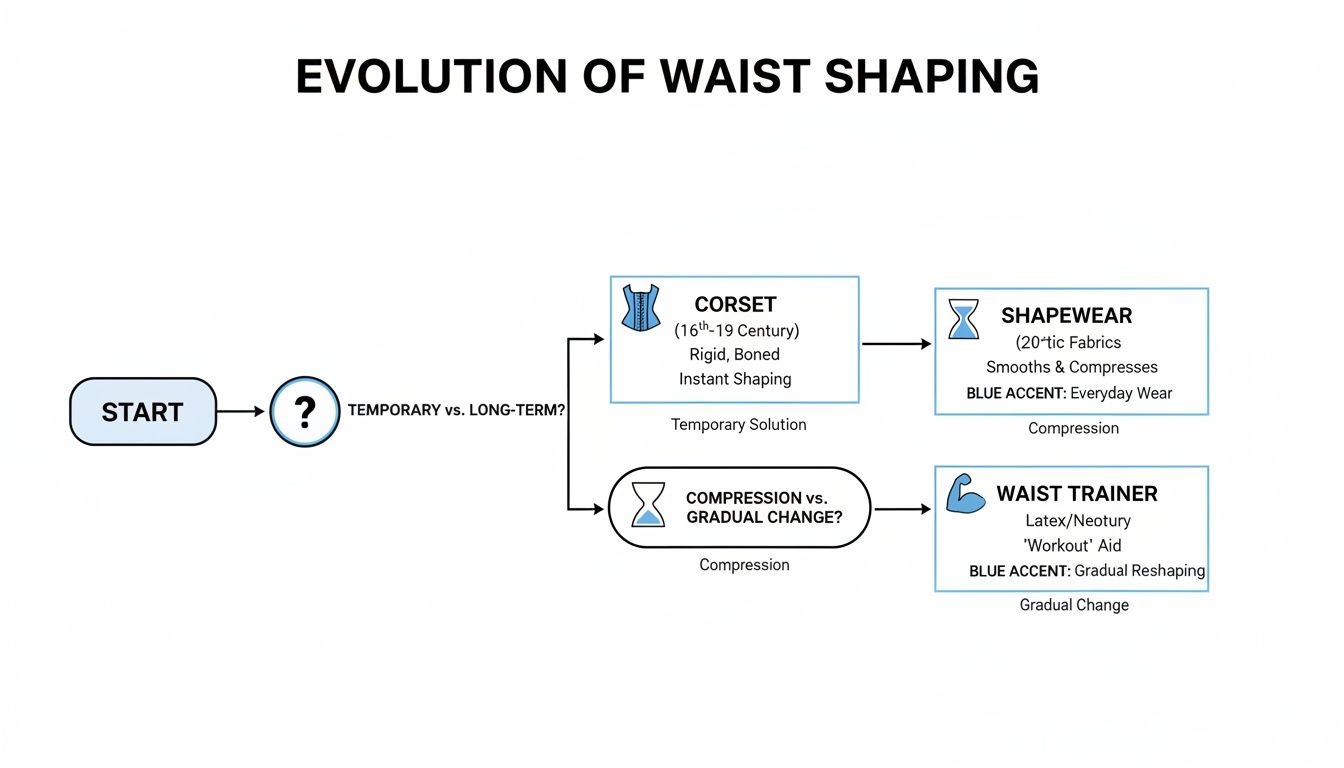
The evolution is all about blending powerful function with the demands of a modern, active lifestyle.
To help you decide, here’s a quick comparison of the most popular waist trainer styles we offer. Think about what you'll be doing most while wearing it to find your perfect match.
| Trainer Style | Primary Function | Best For Activity | Material |
|---|---|---|---|
| Vest-Style Trainer | Full back coverage & posture | All-day office wear, formal events | Latex, Cotton, Spandex |
| Workout Band | Maximize sweat, core heat | Gym, cardio, high-intensity workouts | Neoprene, Polyester |
| Everyday Cincher | Hourglass shaping, smoothing | Daily wear under clothes, errands | Latex, Cotton Lining, Steel Boning |
Each style serves a purpose. A Vest-Style Trainer is fantastic if you want that extra posture support and a smooth line all the way up your back, especially if you sit at a desk. Workout Bands are your gym buddy—flexible, durable, and designed to help you break a serious sweat. And for that classic hourglass look under your favorite dress, an Everyday Cincher provides that perfect balance of firm compression and comfort.
By taking a few moments to measure correctly and think about your goals, you're setting yourself up for success. You’ll choose a waist trainer that not only looks incredible but feels amazing, too.
Getting Started: Safe and Effective Waist Trainer Practices
Getting your waist trainer to work for you is all about using it correctly. The whole point is to feel supported, sculpted, and confident—never squeezed or uncomfortable. If you follow a few simple best practices, you can get that silhouette you're looking for without ever compromising on your well-being.
The golden rule here? Start slow. Think about it like breaking in a new pair of killer heels. You wouldn't wear them for a full eight-hour day right out of the box, right? The same logic applies to your waist trainer. Your body needs a little time to get used to the compression.
Your Break-In Schedule
We recommend starting out by wearing your new waist trainer for just one to two hours a day. This is your "get acquainted" period. If you feel totally comfortable, you can start adding an hour every few days, gradually working your way up to a maximum of six to eight hours.
- Week 1: Keep it light and easy at 1-2 hours per day.
- Week 2: You can level up to about 3-4 hours daily.
- Week 3 and Beyond: Slowly increase until you find your sweet spot, but never go beyond 6-8 hours.
This slow-and-steady approach is the secret to making this a comfortable and consistent part of your routine. Trying to rush it will only lead to discomfort, which means you'll be less likely to stick with it.
The most important piece of advice we can give you is this: listen to your body. If you ever feel pain, shortness of breath, or any kind of sharp discomfort, loosen the garment immediately or just take it off. Your well-being always, always comes first.
Non-Negotiable Safety Rules
Beyond easing into it, there are a couple of hard-and-fast rules to follow. Think of these as non-negotiable for your health and safety.
First, never wear your waist trainer to sleep. Your body needs that time to rest, breathe, and recover without any restriction. The compression can interfere with your natural breathing and circulation when you're lying down for hours on end.
Also, pay attention to the fit over time. If a trainer that used to fit like a glove suddenly starts feeling too tight or starts to pinch, that's your body's signal to loosen it up. Our bodies fluctuate, and the fit should always feel snug and supportive, never painful. Knowing how to spot the signs of a poor fit is key to having a great experience with your new garment.
Busting the Biggest Myths About Waist Training
With so much information (and misinformation!) out there, it’s easy to get tangled up in what waist trainers actually do. Let's clear the air and separate fact from fiction once and for all.
One of the most persistent rumors is that waist trainers can magically burn belly fat. That’s simply not the case. While wearing a neoprene trainer during a workout will definitely make you sweat more around your core, that’s just temporary water weight you’re losing. The compression doesn’t melt, burn, or get rid of fat cells.
A waist trainer is a shaping tool, not a weight-loss device. It’s designed to temporarily mold your silhouette for a smoother, more defined look, but it won’t create permanent physical changes or reduce body fat on its own.
Think of it like this: squeezing a tube of toothpaste in the middle doesn't mean there's less toothpaste inside—it just moves it around. A waist trainer does something similar by redistributing soft tissue to give you that stunning hourglass figure for the moment.
Myth 1: The Tighter, The Better
This is one of the most dangerous misconceptions out there. Cinching a waist trainer as tight as it can go won't speed up your results. In fact, it does the opposite—it can restrict your breathing, cause serious discomfort, and even lead to bruising or other internal problems.
A proper fit should feel like a firm, supportive hug. It needs to be snug, but never painful. The real goal is gentle, consistent compression, not suffocating constriction. Over-tightening completely defeats the purpose of wearing one safely and effectively.
Myth 2: Waist Trainers Can Permanently Shrink Your Ribs
We hear this one a lot. The idea that a modern waist trainer can physically change your bone structure by shrinking your rib cage is a complete myth. For adults whose skeletons have stopped growing, this is biologically impossible.
Centuries ago, historical corsets made with rigid steel boning could shift floating ribs over many years of tight-lacing, but today’s waist trainers are a world apart. They’re made from flexible materials designed for temporary shaping. They work with your body's soft tissue, not your bones. Any change you see is purely cosmetic and only lasts while you're wearing the garment, which is why setting realistic expectations is key to loving what your trainer can do for you
Your Waist Trainer Questions, Answered
Got a few questions swirling around? Perfect. Let's clear up some of the most common things we get asked about wearing and caring for your waist trainer.
Can I Wear a Waist Trainer All Day Long?
This is easily one of our top questions! While it might be tempting, we strongly advise against it. For your comfort and safety, you should stick to a maximum of 6-8 hours a day.
Think of it like breaking in a new pair of shoes. You wouldn't wear them for a full day right out of the box. Start with just an hour or two, and let your body get used to the feeling. Slowly add more time as you feel comfortable. And a non-negotiable rule: never, ever wear your waist trainer to bed.
How Quickly Will I See Results?
You’ll notice a change the second you put it on! That’s the magic of it—it instantly cinches your waist and gives you that smooth, hourglass silhouette under your clothes. But it's important to remember that this immediate "snatched" look is temporary.
For benefits like better posture, consistency is key. Wearing it regularly over a few weeks can help train your muscles to hold a more upright position. Just remember, a waist trainer is a tool for temporary enhancement and support, not for permanent changes to your body.
What's the Best Way to Clean My Waist Trainer?
Taking good care of your garment is the secret to making it last. The rule is simple: always hand wash it. Use cool water and a gentle soap to keep it fresh and in perfect shape.
Here are a few pro tips to protect its structure:
- Never twist or wring it out! That's the fastest way to damage the flexible boning inside.
- Gently pat it with a towel, then lay it flat or hang it to air dry completely.
- Keep it out of direct sunlight or heat, as that can break down the fabric's elasticity over time.
A little bit of care goes a long way in keeping your waist trainer effective and supportive.
Ready to discover the perfect piece to polish your silhouette and unlock a new level of confidence? Explore our entire collection at Snatch Store US. We offer free shipping on every single order, so you can find your ideal fit and style today. Check it out at https://snatchstore.us.
0 comments