
So, you’re thinking about corset training? Let's get one thing straight right away: this isn't about fainting couches or squeezing yourself into something unbearable like you see in period dramas. Modern corset training is a whole different world.
The core idea is simple: using a steel-boned corset to gradually and gently shape your waist over time. The key to doing this right—and safely—is following a slow, progressive schedule. It all starts with "seasoning" your corset, a break-in period that lets both your body and the garment get comfortably acquainted.
Understanding Modern Corset Training
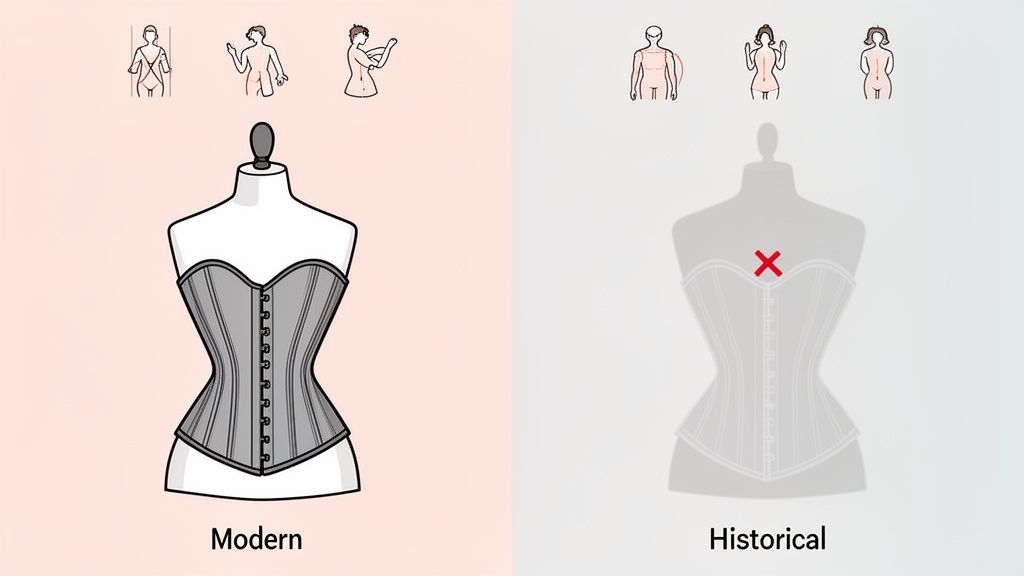
Forget everything you think you know from movies. Today’s approach is focused on safety, comfort, and achieving a silhouette you love—not forcing your body into an extreme shape overnight. It's a journey, not a race.
People come to corsetry for all sorts of reasons. For many, it's about aesthetics and sculpting that classic hourglass figure. But for others, the benefits are much more practical.
Why People Choose Corset Training Today
A well-made, steel-boned corset offers incredible back and posture support. Seriously, it can be a game-changer if you spend hours hunched over a desk. That gentle, firm support encourages you to sit and stand taller, which for some people, can even help with minor back aches.
Beyond the physical, there’s a huge confidence boost that comes with it. Wearing a corset can feel empowering. It's a way to connect with your body and celebrate your shape on your own terms.
Modern corset training isn't about restriction; it's about support and controlled sculpting. The goal is to work with your body, not against it, to create a silhouette that makes you feel strong and confident.
The Evolution from Tightlacing to Training
The intense practice of "tightlacing" really took off in the Victorian era, especially after the steel eyelet was invented in 1827. This little piece of hardware made extreme waist reductions possible, with some stories mentioning waists cinched down to 14 inches over many years.
While that history is interesting, it’s also a powerful reminder of how much things have changed. Today’s methods are all about creating a partnership between you and your corset. It’s a tool for gradual shaping, similar in goal but very different in function from a waist trainer. If you want to dive deeper, you can check out the key differences in our corset vs. waist trainer guide.
Ultimately, when you approach it with patience and listen to your body, modern corset training is a safe and sustainable practice.
How To Choose Your First Training Corset
Choosing your first corset is easily the most important step you’ll take on your waist training journey. Think of it like this: the right corset feels like a firm, supportive hug, while the wrong one is just a recipe for frustration. This isn't just about aesthetics; it's about finding the perfect match for your body, your goals, and your lifestyle.
First things first, let's clear up a common misconception. There's a world of difference between a "fashion corset" and a genuine training corset. Fashion pieces often use plastic boning and flimsy fabrics—great for a one-night costume, but they'll buckle and warp under the pressure of daily wear. They simply aren't built for the job.
For real results and proper support, you absolutely need a steel-boned corset. This is the non-negotiable foundation of safe and effective training. Steel boning provides the durable structure necessary to gently contour your waist over time, giving you that iconic hourglass shape without giving out.
Underbust Versus Overbust Styles
Okay, so you're committed to steel. Now what? Your next big decision is the style: underbust or overbust. Each one offers a different experience and fits different needs.
An underbust corset is exactly what it sounds like—it sits just under your bust and extends down over your hips. It’s the go-to choice for most daily trainers, and for good reason:
- Super Versatile: You can wear it with your favorite bra, and it stays pretty discreet under most outfits.
- Freedom to Move: It gives you more upper-body mobility, which is a lifesaver on long workdays or when you need to be active.
- Beginner-Friendly: The shorter design often feels less intimidating and restrictive when you're just starting out.
An overbust corset, on the other hand, covers the bust for an all-in-one shaping solution. This style is a classic for a reason and is often picked for:
- All-in-One Support: No need for a separate bra! This is a fantastic option, especially for those with a fuller bust.
- The Ultimate Silhouette: An overbust delivers that dramatic, sweeping hourglass figure that’s perfect for special events or wearing as a statement top.
- Incredible Posture Correction: With its full-torso coverage, it provides unmatched support for your back and shoulders.
To put it in perspective, a bride might opt for a sleek underbust to wear secretly under her gown for that perfect waistline without messing with the dress's neckline. Someone looking for maximum back support while working from home, however, might fall in love with the complete embrace of an overbust. There are so many incredible body shaping corsets out there to fit exactly what you're looking for.
To help you decide, here’s a quick breakdown of what makes each style unique.
Underbust vs Overbust Corset Comparison
Choosing the right corset style is key. This comparison will help you match the corset's features to your body type, goals, and how you plan to wear it—from daily support to making a statement.
| Feature | Underbust Corset | Overbust Corset |
|---|---|---|
| Coverage | Sits below the bust, extends over hips. | Covers the bust, extends over hips. |
| Bra Compatibility | Worn with your own bra. | Replaces the need for a bra. |
| Discreetness | More easily concealed under clothing. | More of a statement piece, harder to hide. |
| Mobility | Offers greater upper-body freedom. | Can feel more restrictive for some activities. |
| Best For | Daily training, beginners, layering. | Special occasions, posture support, larger busts. |
Ultimately, the best choice comes down to personal comfort and your specific training goals. Many seasoned corset wearers have both styles in their collection for different occasions!
Taking Your Measurements Correctly
This is the part you absolutely cannot skip or rush. A great fit starts with great measurements. An ill-fitting corset won’t just be ineffective—it will be flat-out uncomfortable. So, grab a soft measuring tape, and let's get this right.
Stand in front of a mirror or ask a friend to help you. You want the tape to be snug against your body but not digging in. For every measurement around your torso, make sure the tape is perfectly parallel to the floor.
You need three key numbers:
- Natural Waist: Find the smallest part of your torso. This is usually about an inch above your belly button, right where you naturally crease when you bend to the side.
- Underbust: Measure right underneath your bust, exactly where the band of your bra sits.
- High Hip: Feel for the top of your hip bones (that bony ridge) and measure around your body at that point.
Pro Tip: Take each measurement three times to make sure your numbers are consistent. If you get slightly different results, just use the average. This little bit of extra effort can save you from a major sizing headache later.
With your measurements in hand, you’re ready to find your size. The golden rule is to choose a corset with a waist measurement that is 4 to 6 inches smaller than your natural waist. For example, if your waist is 32 inches, you’ll want to look at a 28" or 26" corset.
If you're a beginner, always start with a smaller reduction of around 4 inches. It’s so tempting to go for a dramatic cinch right away, but that’s a common mistake. Starting too small is not only uncomfortable but can also damage your new corset. Patience is key
The Crucial Art of Seasoning Your Corset
I see this all the time: someone gets their beautiful new corset, and in their excitement, they try to lace it completely shut on the very first try. Please don't do this! It's the fastest way to damage your new garment and have a really uncomfortable experience.
Think of a brand new, steel-boned corset like a pair of high-quality leather boots. It needs a gentle break-in period. We call this "seasoning," and it’s an essential first step. This process gives the stiff fabrics time to soften up and allows the steel bones to slowly, gently mold to your unique shape.
Skipping this step almost always leads to pinching, discomfort, and putting way too much stress on the seams and bones. Patience here is everything. It's what makes the difference between a corset that feels like a second skin and one that gets tossed in the back of the closet.
This simple two-week schedule is all about letting your body and the corset get to know each other. It’s a slow dance, not a race.
Your Two-Week Seasoning Schedule
The goal right now is not waist reduction. It's simply about breaking in the garment. For the first week, you should only lace it snugly—never tight. It should feel like a firm, reassuring hug, with no gaps at the top or bottom edges.
- Days 1-3: Wear your corset for just 1-2 hours a day. Lace it just enough to feel secure, leaving a pretty big lacing gap in the back. You're just getting used to the sensation.
- Days 4-7: You can start wearing it for 3-4 hours daily. Now, you can gently pull the laces a tiny bit tighter, maybe closing the back gap by about an inch. The most important rule? Listen to your body. If you feel any sharp pain, loosen it immediately.
Moving into the second week, you'll notice a real change. The corset will already feel less rigid as it starts conforming to your torso.
- Days 8-11: Go for 4-5 hours of wear time. At this point, you can lace a little more firmly, aiming to close the gap by another inch or so. It should still be perfectly comfortable to sit, move, and breathe easily.
- Days 12-14: Feel free to wear it for up to 6 hours. The corset should feel noticeably more comfortable now, letting you close it a bit more. By the end of this week, your corset is officially seasoned and ready for your regular training schedule!
Getting this part right all starts with the choices you made before your corset even arrived—setting your goals and measuring correctly are the foundation for everything that follows.
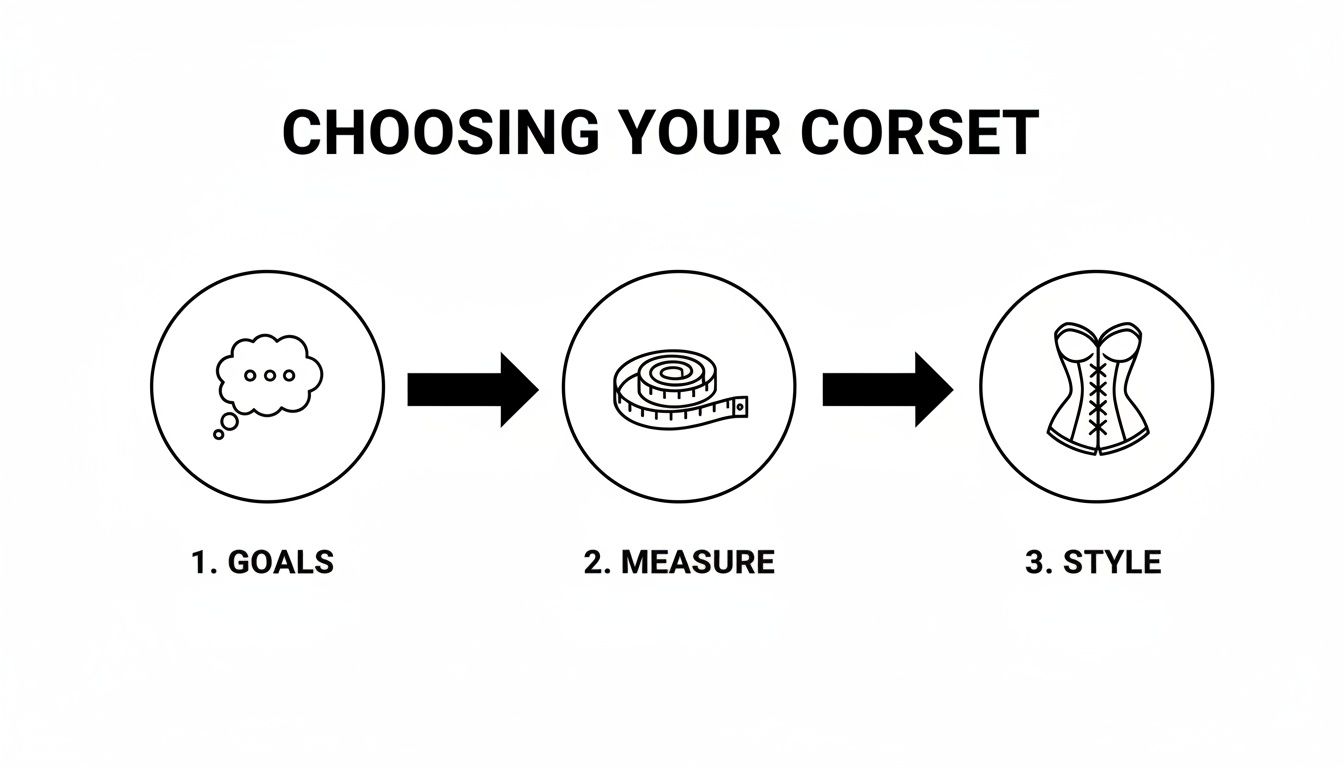
As this guide shows, knowing your "why" and getting those numbers right are the non-negotiable first steps.
What If I Run Into Issues?
Even when you're careful, you might hit a small snag. The front busk—the part with the metal loops and pins—can feel especially stiff at first. A great little trick is to fasten it from the bottom up, which gives you better leverage. Don't be afraid to gently "break" or pre-bend the corset over your knee a few times before putting it on, too.
If you feel any "hot spots" or mild pinching, it's a sure sign you've laced too tightly, too soon. Just loosen the laces and give your body a break. Remember, seasoning is a marathon, not a sprint.
This careful, gradual process is a world away from the myths you might have heard about historical corsetry. While anthropological studies of corsets from 1700-1900 found some garments designed to close at an average waist of just 22.1 inches, skeletal evidence often shows that wearers lived long, healthy lives. It really challenges the idea that corsets were always extreme or harmful.
Today, our approach at Snatch Store US is all about safe, comfortable body shaping—not historical reenactment. If you're curious, you can learn more about how corsetry has evolved over time and see how modern methods prioritize health and well-being.
Seasoning isn't just for the corset—it's for you, too. This period allows your body to slowly adapt to the unique sensation of wearing a structured garment, ensuring your entire training experience is built on a foundation of comfort.
Creating a Sustainable Corset Wearing Schedule
So, you’ve successfully seasoned your corset, and it’s now beautifully molded to your unique curves. This is where the real fun begins! You can finally move from that gentle break-in phase to a consistent training schedule that will help you reach your goals.
The secret to success here is simpler than you might think: consistency and listening to your body.
Corset training isn’t a race to see who can lace down the tightest, the fastest. It’s all about creating a sustainable routine that actually fits into your life. Pushing through sharp pain or genuine discomfort is a major red flag—and it actually works against you. Real, lasting progress comes from gradual, comfortable wear.
Building Your Weekly Wear Plan
Your schedule should be a slow and steady progression. You’ll want to gradually increase how long you wear the corset each day. A great place to start is with the final time from your seasoning period, which is probably around 4-6 hours, and build up from there.
The goal is to add about 30 minutes to an hour of wear time each week until you’ve reached your daily target.
A typical progression could look something like this:
- Week 1: Aim for 4 hours a day, for 5-6 days this week. Keep the lacing firm but comfortable—you should feel the support without it restricting your breath.
- Week 2: Let's bump it up to 5-6 hours per day. You can start to cinch the laces just a little tighter, maybe reducing your lacing gap by about half an inch.
- Week 3: Now you’re progressing to 6-7 hours daily. The corset should start feeling like a natural part of your day, giving you incredible posture support.
- Week 4: Target 8 hours of wear time. For many people, this is the sweet spot for achieving noticeable, long-term results.
This slow-but-sure approach allows your body to adapt safely, turning the experience into something enjoyable rather than a chore. If you want to dive deeper into the nuances of daily wear, you can explore our dedicated guide on how long you can wear a waist trainer safely.
Crucial Insight: Your body is different every single day. Some days you might feel amazing lacing a bit tighter, while other days—especially if you're feeling bloated or tired—you may need to loosen it. Always, always adjust for comfort. Your corset should work for you, not the other way around.
Integrating Corset Wear into Your Life
Making corsetry a practical part of your routine is everything. If you spend hours at a desk, an underbust corset can be an absolute lifesaver for your posture. Try wearing it during your work-from-home hours; you'll quickly fall in love with the back support that keeps you from slouching.
Or maybe you’re getting ready for a big event like a wedding? Start your training schedule at least 3-4 months ahead of time. Wear the corset for a few hours each day, slowly increasing the duration. This way, when the big day arrives, wearing it under your gown for 8+ hours will feel completely natural and comfortable.
The Importance of Rest Days
Just like any fitness routine, your body absolutely needs time to recover. Don't feel pressured to wear your corset seven days a week. In fact, you shouldn't! Building 1-2 rest days into your weekly schedule is essential for healthy training.
These breaks give your skin a chance to breathe and your core muscles time to work on their own, preventing you from becoming over-reliant on the corset for support. Listening to your body and giving it time to rest is a core part of any safe and effective corseting plan.
Ultimately, the perfect schedule is the one you can stick with consistently and comfortably. You'll know it's time to consider sizing down when you can easily and completely close your current corset and still feel like you could go tighter. That’s when you know you're making real progress.
Corset Training Safely and Avoiding Common Risks
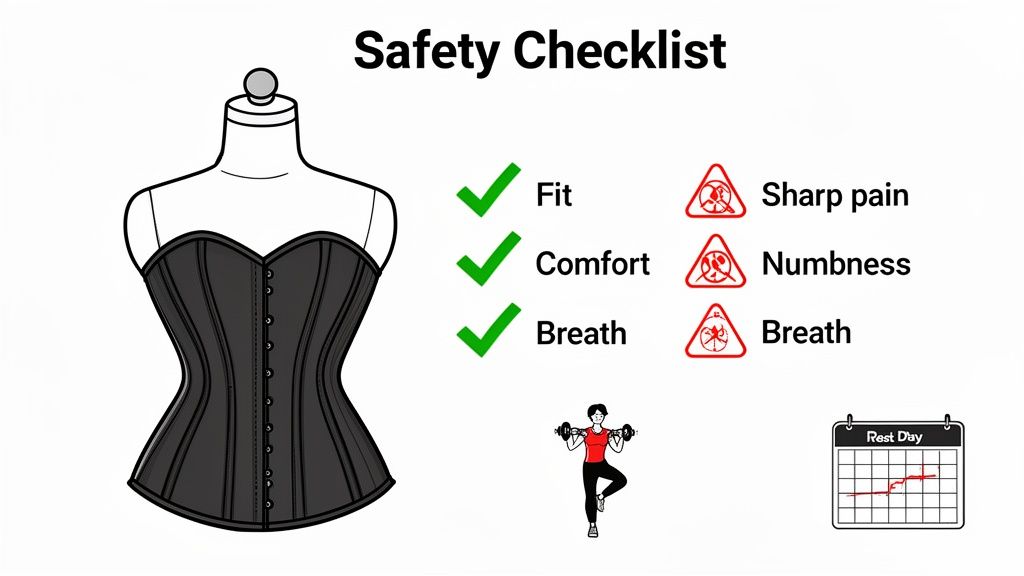
Starting your corset training journey is incredibly exciting, but let’s get one thing straight from the start: your well-being is everything. Forget the dramatic movie scenes of fainting ladies. Modern corsetry is all about safety, listening to your body, and creating a beautiful silhouette without sacrificing your health.
The single most important skill you'll develop is telling the difference between gentle, supportive pressure and actual pain. A well-fitted corset should feel like a firm, comforting hug—never a cage. You need to be able to breathe deeply and go about your day without anything digging in or pinching you.
If something hurts, that’s not a sign to be tough. It’s your body telling you to loosen the laces or take the corset off for a while. Period.
Red Flags to Never Ignore
Your body is your best guide, and it speaks a very clear language. Certain feelings are absolute, non-negotiable red flags. Pushing through them is how injuries happen, and it usually means your corset doesn't fit right or you're trying to tighten it way too fast.
Listen for these warning signs:
- Sharp, Pinching, or Jabbing Pain: This is your body screaming "NO!" Pain is never part of the process.
- Numbness or Tingling: If you feel "pins and needles" anywhere—your hips, legs, or torso—the corset is likely pressing on a nerve. Loosen it immediately.
- Shortness of Breath: Your breathing might feel a little different, but you should always be able to take a full, deep breath. If you feel winded, you're laced too tight.
- Bruising or Chafing: A little redness where the corset sits is normal, but dark bruises or raw, broken skin are clear signs of a bad fit or excessive pressure.
If you feel any of these, take the corset off. Give your body at least a day to recover before you try again, and when you do, keep it much looser. If the problem keeps happening, you may need to be remeasured. The style might just be wrong for your unique shape.
Let's Bust Some Myths About Your Insides
One of the oldest, spookiest myths is that corsets "crush your organs." Honestly, this is mostly leftover drama from Victorian anti-corset propaganda. A modern, properly fitted training corset works in a completely different way.
The gentle, gradual pressure simply encourages your organs to shift slightly over time, moving into available space within your abdominal cavity. It’s not so different from how your body naturally makes room during pregnancy. When done slowly and correctly, this is not harmful and doesn't mess with organ function.
A well-made corset actually provides incredible external support. By improving your posture and stabilizing your core, it can even take some pressure off your internal systems. It's about working with your body, not fighting against it.
Why You Still Need to Strengthen Your Core
Your corset is an amazing support tool, but it's not a replacement for your own muscles. Relying on it 100% of the time without maintaining your own core strength can cause your abdominal and back muscles to get a little lazy.
The fix is easy. Just weave some simple core exercises into your routine on the days you aren't wearing your corset. No need for a grueling gym session; consistency is what matters.
A few great ones to start with:
- Planks: The gold standard for engaging your entire core.
- Bird-Dog: Fantastic for stabilizing your lower back and improving balance.
- Glute Bridges: Strengthens your glutes and lower back, the powerhouse of good posture.
By keeping your own muscles strong, you create a perfect partnership between your body's natural strength and the external support of the corset. This is the real secret to safe, effective, and successful corset training.
The world of corsetry has a wild and fascinating past, from women giving them up during wartime to free up metal for battleships to their modern resurgence. You can dive deeper into the fascinating evolution of corsetry on corset-story.co.uk to see just how far we've come in prioritizing both beauty and well-being.
Answering Your Top Corset Training Questions
As you start this journey, a few questions are bound to come up. It's totally normal! Getting clear, honest answers makes all the difference. We've gathered some of the most common questions we hear from our community to help you train with total confidence.
Can I Sleep in My Corset to Speed Up Results?
This is easily one of the most-asked questions, and our answer is always a firm no. We strongly advise against ever sleeping in your corset. Your body absolutely needs that time at night to rest, repair, and breathe without restriction.
Wearing a corset overnight can mess with your natural breathing and is just plain uncomfortable and unsafe. Real, lasting results come from consistency during the day, not from wearing your corset 24/7.
It's far better to stick to a comfortable, progressive daytime schedule. Safe, sustainable training is what gets you to your long-term goals, not pushing your body past its limits overnight.
How Do I Keep My Corset Clean?
Proper care is everything when it comes to protecting your investment and making sure your corset lasts for years. The golden rule? Never, ever put it in a washing machine or dryer. The water, heat, and agitation will completely destroy the fabric and warp the delicate steel boning.
Here’s the right way to care for your corset:
- Air It Out: After every single wear, hang your corset inside-out over a chair or hanger. This lets moisture evaporate and keeps it smelling fresh.
- Spot-Clean Only: For little spills, just use a damp cloth with a tiny bit of mild, gentle soap. Dab the spot carefully, then let it air dry completely.
- Dry Clean as a Last Resort: If a deep clean is unavoidable, find a professional dry cleaner you really trust. This should be a very rare occurrence, saved for true emergencies.
The single best thing you can do for your corset's hygiene is to always wear a thin, breathable liner or camisole between your skin and the garment. This layer absorbs the majority of sweat and body oils, drastically reducing the need for cleaning.
What if My Corset Feels Uncomfortable?
This is the most important question of all, and the answer is simple: listen to your body. Discomfort is not progress. Any sharp pain, pinching, or serious discomfort is your body telling you to immediately loosen the laces or take the corset off.
Usually, discomfort comes from a couple of common mistakes. Most often, it's just a case of lacing up too tightly too soon, before the corset has been seasoned or your body has had a chance to adjust.
If you feel a specific "hot spot," the first thing to check is your positioning. Make sure the corset is sitting correctly over your hips and isn't riding up into your bust. If it still feels off even when laced loosely, the style or size might not be the right match for your unique body type. Give yourself a day off, then try again with a much looser fit.
How Long Until I See Results from Corset Training?
Patience is truly your best friend on this journey. Results are different for everyone and depend on things like your body composition, how consistently you wear your corset, your diet, and your exercise routine.
Of course, you’ll see an instantaneous hourglass shape the moment you lace up a well-fitted corset. That's the immediate magic of it!
For the more semi-permanent waist reduction, the timeline is a bit more gradual.
- The First Few Weeks: With consistent wear (think 4-6 hours a day), some people start to notice subtle changes in their un-corseted waist within the first few weeks.
- A Few Months In: More significant, lasting results typically take several months of dedicated training. This is when you might find you can comfortably close a corset that used to have a big lacing gap.
Remember, this is a gradual shaping process, not an overnight fix. Progress is measured in months, not days. The best approach is to enjoy the journey and the beautiful silhouette your corset gives you every time you wear it.
Ready to find the perfect corset to begin your journey or take your training to the next level? Explore the curated collection at Snatch Store US, where we offer beautiful, supportive shapewear designed for every body and every goal. Find your perfect fit and embrace your curves with confidence. Visit us today at https://snatchstore.us to get started.
0 comments