
So, you’re hearing about corsets and waist trainers and probably thinking, "Aren't they the same thing?" It’s a common mix-up, but the truth is, they're built for completely different jobs. Think of it like this: one is a specialized tool for long-term sculpting, and the other is your go-to for an instant, temporary confidence boost.
The biggest giveaway is what’s on the inside. A traditional corset uses strong steel boning and a lace-up back to gradually cinch and reshape your waist over time. It’s a commitment. In contrast, a modern waist trainer is usually made of flexible materials like latex to give you immediate compression, smooth things out under an outfit, and maybe make you sweat a little more at the gym. The effect is amazing, but it's just for the day.
Your Guide to Corsets and Waist Trainers
Deciding between a corset and a waist trainer can feel overwhelming, but once you know what each is designed for, the choice becomes clear. One is a historical garment crafted for serious, long-term body modification, while the other is modern shapewear designed for a temporary hourglass silhouette and support.
This guide will break it all down for you, so you know exactly which one fits your lifestyle and goals.
To get started, let's put them side-by-side. This table gives you a quick snapshot of where they differ most.
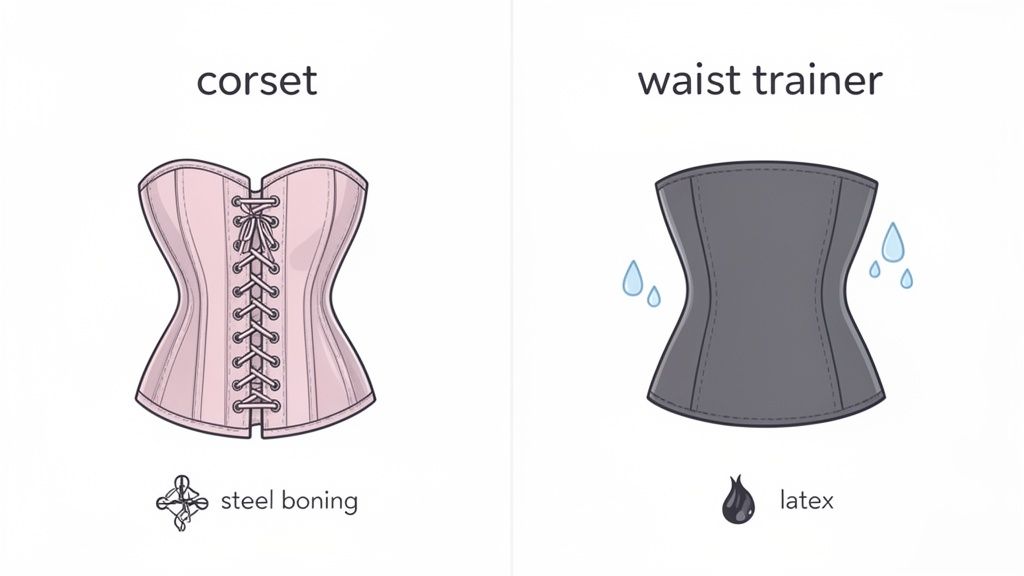
Corset vs Waist Trainer At a Glance Comparison
This chart cuts right to the chase, comparing the core features of each garment.
| Feature | Traditional Corset | Modern Waist Trainer |
|---|---|---|
| Primary Material | Coutil, satin, cotton, or leather | Latex, neoprene, or spandex blends |
| Structural Support | Rigid steel boning | Flexible plastic or spiral steel boning |
| Closure System | Rear lacing for adjustable tension | Hook-and-eye closures or zippers |
| Main Function | Gradual waist reduction (training) | Temporary compression & smoothing |
| Typical Results | Semi-permanent waist reshaping | Immediate, temporary slimming effect |
| Best For | Long-term waist training, dramatic shaping, fashion statements | Everyday smoothing, workout enhancement, posture support |
| Comfort Level | Restrictive; requires a "seasoning" period | Flexible and less restrictive for daily wear |
| Wear Time | Worn for progressively longer hours for training | Typically worn for a few hours at a time, often during workouts |
See the difference? It all comes down to your end game.
Understanding the Core Distinctions
As the table shows, the "corset vs. waist trainer" question isn't about which one is better—it’s about what you need it to do. Corsets are built tough, using strong, non-stretch fabrics like coutil and reinforcing them with solid steel bones. That robust construction is what allows them to apply consistent, firm pressure that can, over many months, physically redefine your waistline for that dramatic hourglass figure.
A corset is a tool for structural change, using tension and rigidity to reshape the waist over time. A waist trainer is a tool for temporary compression, using elasticity to create a smooth silhouette for a few hours.
Waist trainers, on the other hand, are all about flexibility. They're made from stretchy materials like latex or neoprene, and their goal isn't permanent change but instant gratification. They cinch you in to create a slimmer look under your clothes right now. While they have some light boning to keep them from rolling down, it doesn't have the strength to actually alter your shape in the long run. Instead, it’s perfect for smoothing your midsection and even increasing heat around your core during a workout to promote sweat.
How Construction and Materials Define Function
When you get down to it, the real difference between a corset and a waist trainer is in how they’re made. The materials and the way a garment is built completely dictate what it can do, how it feels, and the results you can expect. One is a piece of engineering for structural change, while the other is all about flexible, temporary compression.

Knowing this is the key to picking the right tool for your body goals. Let's break down what makes each one tick.
The Anatomy of a Traditional Corset
A true corset is a powerhouse of tension and strength. It’s built to handle immense pressure and, over time, actually reshape the body. That power comes from three key components working together.
First, you have the steel boning. This is the corset’s skeleton, giving it the rigid structure needed for serious waist training. You'll typically find two types:
- Flat Steel Bones: These are super-rigid steel strips, usually found at the front busk and along the back lacing, providing solid, unbending support.
- Spiral Steel Bones: Made from coiled steel, these are more flexible. They curve with your body, making the corset more comfortable for movement while still providing that essential structure.
Next up is the fabric. Corsets are made from tough, non-stretch materials, and coutil is the absolute gold standard. This densely woven cotton fabric is specifically designed to resist the intense pulling and strain of tight-lacing, ensuring the corset holds its shape and its power for years.
Finally, the lacing system in the back is the engine. This combination of grommets and strong laces gives you incredible control over the tension. It lets you gradually cinch your waist, applying consistent pressure to achieve that semi-permanent waist reduction.
It's the combination of rigid steel bones, non-stretch coutil, and a powerful lacing system that makes a corset a body modification tool. Every single piece is chosen for strength, allowing it to physically alter your waistline.
The history here is fascinating. From the 16th century all the way to the late 19th, tightly-laced corsets were the look in European fashion, often cinching waists far smaller than their natural size. In fact, surviving corsets from between 1700-1900 have an average closed waist of just 22.1 inches, which shows you just how dramatic the hourglass silhouettes of eras like the Victorian period really were.
The Composition of a Modern Waist Trainer
Where corsets are rigid, waist trainers are elastic. They're built for temporary compression and flexibility, and they’re designed to make you sweat—not to permanently change your shape.
The star material in most waist trainers is latex or neoprene. These rubber-like fabrics give you strong, even compression all around your midsection. The key here is elasticity; they stretch and move with you while still pulling you in for that smoother, slimmer look under your clothes.
This elastic construction also helps with thermogenesis—or creating heat. By trapping heat around your core, a waist trainer makes you sweat more during a workout, which can help you shed temporary water weight. If you're curious about how that compression works, our guide explains how shapewear works in more detail.
Instead of steel, waist trainers use flexible plastic or spiral steel boning. These flexible "bones" aren't for reshaping your body. They're there to keep the garment from rolling or bunching up while you move. They offer light support and help the trainer hold its shape, but they don't have the power to actually modify your waist.
The closure system is also completely different. Waist trainers use hook-and-eye closures, which are fast and easy to do up and usually offer a few columns for slight adjustments. This gives you a firm hold for a few hours, but it can't create the kind of powerful, incremental tension you get from a corset’s lacing system.
All of this makes a waist trainer a fantastic tool for an instant, temporary cinch. It smooths you out for an event, gives you a nice postural reminder, and can boost your workout, but its effects are gone the moment you take it off.
So, Which One Is Right For You?
Knowing the difference between a corset and a waist trainer is one thing, but figuring out which one actually fits your life and your goals is what really matters. It's about matching the right tool to the right job. Think of it this way: one is a specialized piece of equipment for major transformations, while the other is your go-to accessory for everyday confidence boosts.
A corset is a commitment. It’s for the big moments and the long-term goals that require serious, structural shaping. Its rigid design isn't meant for a quick coffee run; it's for creating a truly dramatic silhouette. On the other hand, a waist trainer is all about immediate, flexible results for your here-and-now needs, making it a super practical part of a modern wardrobe.
When to Reach for a Traditional Corset
A steel-boned corset is your non-negotiable choice when your goal is a significant, lasting change to your silhouette or when you need an authentic, unbending structure. It’s not a quick fix—it’s an investment in a specific look or a dedicated journey.
You’ll want a corset for these kinds of situations:
- Serious Waist Training: If you’re committed to semi-permanently reducing your natural waist size, a steel-boned corset is the only way to go. Its lacing system is what allows you to apply gradual, controlled tension over months to gently reshape your waist.
- High-Fashion and Bridal Looks: That flawless, rigid hourglass foundation required for a couture gown or wedding dress? A corset provides a level of structure that no flexible shapewear can touch. It creates that perfect, dramatic line.
- Historical or Theatrical Costumes: For anyone into historical reenactments, cosplay, or theatre, a genuine corset is often essential to nail the correct period silhouette and posture. Authenticity is key!
- Serious Postural Support: If you're looking for firm, unbending support for your back and torso, the rigid steel boning in a corset offers stabilization that’s in a different league from elastic garments.
Choosing a corset means you’re ready for a process. It requires patience, precise sizing, and a "seasoning" period to let it mold to your body. But for these specific goals, the results are simply unmatched.
A corset is the answer when you need structural change or a silhouette that can't be compromised by movement. It’s about building a foundation, not just smoothing one over.
When a Modern Waist Trainer is Your Best Bet
The modern waist trainer is the hero where flexibility, comfort, and a temporary boost are what you need. It’s a versatile tool designed for the fast pace of daily life, giving you instant results without the long-term commitment of a corset.
A waist trainer is the clear winner in these scenarios:
- Everyday Smoothing Under Clothes: Need a seamless, sleeker line under that body-con dress or your work clothes? A waist trainer instantly compresses and smooths your midsection for a polished look that lasts all day. Easy.
- Boosting Your Workout: The thermogenic magic of latex and neoprene waist trainers is all about increasing sweat around your core while you exercise. This can help you shed temporary water weight and really keeps you mindful of engaging your core.
- A Gentle Nudge for Your Posture: If you find yourself slouching at your desk, a waist trainer is like a gentle, flexible reminder to sit up straight. It supports better posture without the rigid restriction of a corset, making it comfortable enough to wear for hours.
- Postpartum Abdominal Support: Once cleared by a doctor, many new moms love the gentle compression a waist trainer provides. It offers a feeling of support for abdominal muscles during postpartum recovery.
Since waist trainers blew up in the 2010s, thanks to social media and the athleisure movement, they’ve become a shapewear staple. Most people use them for that immediate visual cinch and for the extra sweat during their daily hustle. This really highlights the difference between them and the dedicated, long-term goals of corset wearers. To learn more about how they can fit into your routine, check out our guide on the best waist trainer for women.
Short-Term Look vs. Long-Term Results: What to Expect
When it comes to choosing between a corset and a waist trainer, managing your expectations is everything. One gives you an instant, dramatic change for a day, while the other is a serious commitment to a gradual, longer-term transformation. Let's break down what that really means for your body goals.
A waist trainer’s magic is all about that immediate “wow” factor. The second you put it on, the high-compression material—usually latex—instantly cinches your waist, creating that smooth, defined silhouette you’re after. It’s the perfect secret weapon for looking flawless under an outfit for a special night out or just for a daily confidence boost.
But it’s important to remember this effect is temporary. Once you take the waist trainer off, your body goes right back to its natural shape. Think of it as makeup for your figure; it enhances what you have for the time you're wearing it, but it doesn't fundamentally change your body's structure.
The "On-Demand" Hourglass: Waist Trainer Effects
A waist trainer is all about temporary compression. That instant slimming is its biggest selling point, smoothing out any bumps and giving you a streamlined look that can make you feel amazing in seconds. It’s your go-to for looking and feeling great for a few hours at a time.
Beyond the aesthetics, many women love the postural support. The firm but flexible material acts as a gentle nudge to stand and sit a little taller, which can be a nice bonus for anyone who tends to slouch. Plus, the thermogenic quality of latex can make you sweat more around your core during a workout, helping you shed a bit of temporary water weight.
A waist trainer is a powerful cosmetic tool. It delivers an "on-demand" hourglass figure that lasts as long as you wear it, making it perfect for short-term goals.
The Real Deal: Long-Term Shaping with a Corset
A steel-boned corset, on the other hand, is built for a completely different journey: long-term, semi-permanent waist reduction through a process called waist training. This isn't a quick fix. It's a dedicated practice that takes consistency and patience over months, sometimes even years.
The corset's rigid design is what makes this possible. With its steel boning, non-stretch fabric, and a powerful lacing system, it applies consistent, firm pressure to your torso. Over time, this pressure can gently mold the lower floating ribs inward while compressing the soft tissues around your waist.
This slow, controlled process can actually lead to a semi-permanent reduction in your natural waist size. The results stick around for much longer, even when you're not wearing the corset, though you'll need to maintain a routine to preserve that shape.
A Realistic Look at Timelines
It's so important to be realistic about the commitment required for each. With a waist trainer, the timeline couldn't be simpler: put it on, and you see the difference right away. No long-term plan is needed for a lasting change. If you want more tips on daily wear, check out our guide on how long you can wear a waist trainer safely.
Corset training is a much longer game. Here’s a typical timeline:
- The First Month (Seasoning): You’ll spend the first few weeks just "seasoning" or breaking in your corset. This means wearing it loosely for only an hour or two a day to let it slowly mold to your unique shape.
- Months 1-3: Now you can start wearing it for longer periods and begin to cinch the laces a little tighter. You might start to see small, subtle changes in your un-corseted waist measurement here.
- 6+ Months: With consistent, daily wear, this is when you’ll start to see more noticeable and lasting waist reduction.
Ultimately, the choice comes down to what you really want. Are you looking for an instant, temporary boost for an event, or are you ready to embark on a dedicated journey toward long-term, semi-permanent reshaping?
So, Which One Is Right for You? A Practical Guide
Okay, let's cut through the noise. Deciding between a corset and a waist trainer really just comes down to one simple question: What are you trying to achieve?
Instead of getting bogged down in specs and features, let's match your goal directly to the right tool. Think of it this way: you wouldn't use a hammer to turn a screw. Same idea here. By focusing on your "why," you'll know exactly which garment will give you the results you're after.
For Instant Smoothing and Everyday Wear
If your main goal is getting a quick, smooth silhouette for your daily outfits, a waist trainer is your new best friend. It’s built for immediate results without the long-term, intensive commitment of a corset.
A waist trainer is probably what you're looking for if you want to:
- Create a Flawless Foundation: Got a form-fitting dress or a sharp professional outfit that needs a little extra polish? A waist trainer provides that seamless compression, smoothing your midsection for a look that stays sleek all day long.
- Turn Up the Heat on Your Workouts: The idea here is to boost thermal activity around your core while you exercise. A good latex waist trainer traps heat, making you sweat more while also keeping you mindful of engaging those abs.
- Get a Little Postural Nudge: Need a gentle reminder to sit and stand straighter at your desk? A waist trainer offers flexible support that encourages better posture without feeling like you're in a straightjacket.
Think of a waist trainer as your on-demand solution for short-term aesthetic goals and a little lifestyle support.
For Dramatic Shaping and Long-Term Goals
Now, if you're talking about a significant, semi-permanent change to your body's shape or need an absolutely unyielding structure for a special occasion, then a steel-boned corset is the only real option. This is a specialized, powerful tool for transformative results.
You definitely need a steel-boned corset if your goal is:
- A Serious Waist Training Regimen: If your mission is to gradually reduce your natural waist measurement over months or years, the rigid structure and adjustable lacing of a true corset are non-negotiable. This is what actually makes that long-term reshaping possible.
- The Perfect Bridal or High-Fashion Silhouette: For a wedding gown or any couture piece that demands a perfectly sculpted, dramatic hourglass figure, a corset provides the rock-solid support and cinch that flexible shapewear just can't touch.
- Authentic Historical or Theatrical Costumes: To get that historically accurate silhouette for cosplay, stage performances, or reenactments, a genuine corset is essential. It creates the specific posture and shape of whatever era you're trying to embody.
A corset is an investment in a specific, often dramatic, outcome. It’s the tool for building a new foundation, not just for temporarily smoothing the one you have. It requires patience and consistency, but for these goals, its results are unparalleled.
This chart breaks it down even simpler, connecting your main goal directly to the right garment.
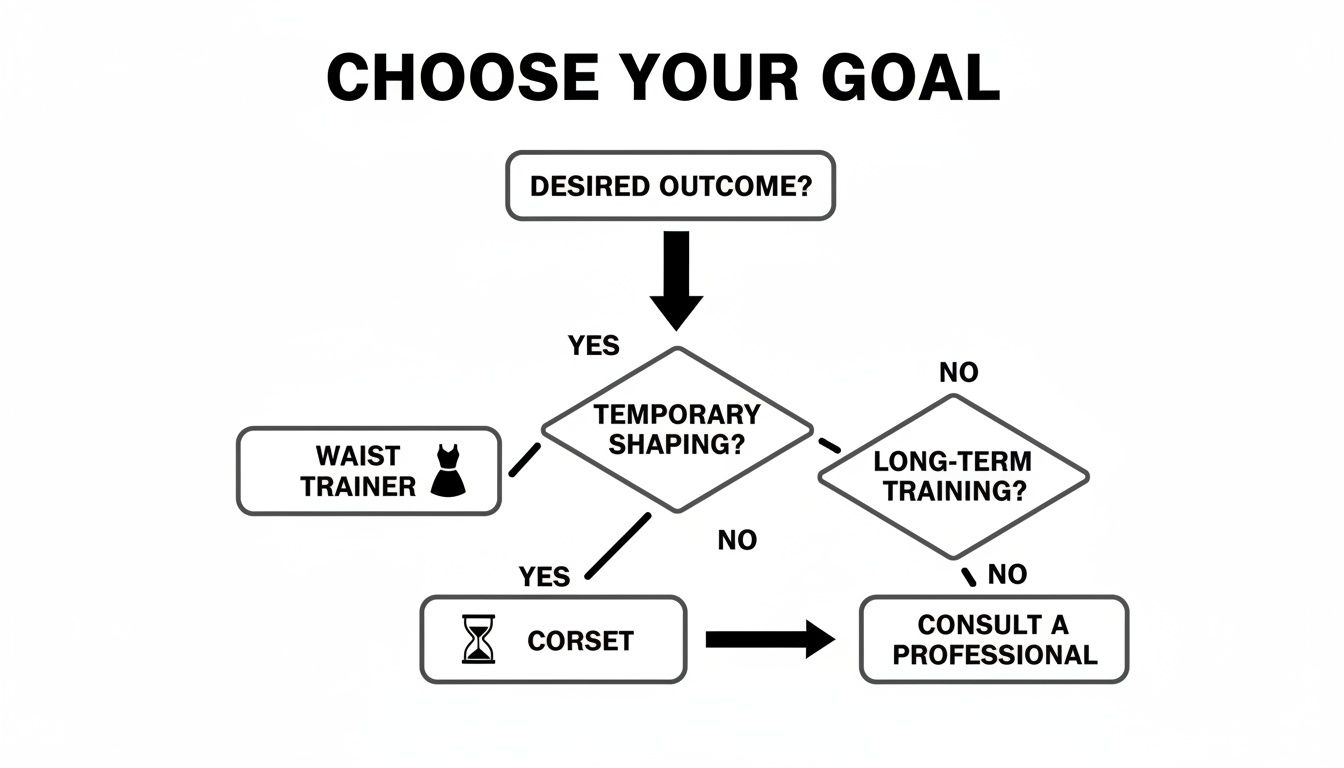
It really just boils down to whether you're looking for a temporary enhancement or you're ready to start a long-term modification journey.
Making Your Final Call
At the end of the day, the "corset vs. waist trainer" debate isn’t about which one is "better." It's about which one is right for you. Your lifestyle, your goals, and your level of commitment are what will point you to the perfect fit.
Do you need an easy, flexible tool for an instant confidence boost under your favorite clothes? A modern waist trainer from Snatch Store US is designed for exactly that. It slips right into your daily routine for immediate smoothing and light support.
Or are you embarking on a dedicated journey to physically reshape your waistline for a more lasting, dramatic hourglass figure? That path requires the serious strength and structure of a traditional steel-boned corset. This is a commitment to a process, not just a quick fix for a single outfit.
Ask yourself what you really want to achieve. Once you know that, the answer becomes crystal clear.
Sizing, Fit, and Care for Optimal Performance
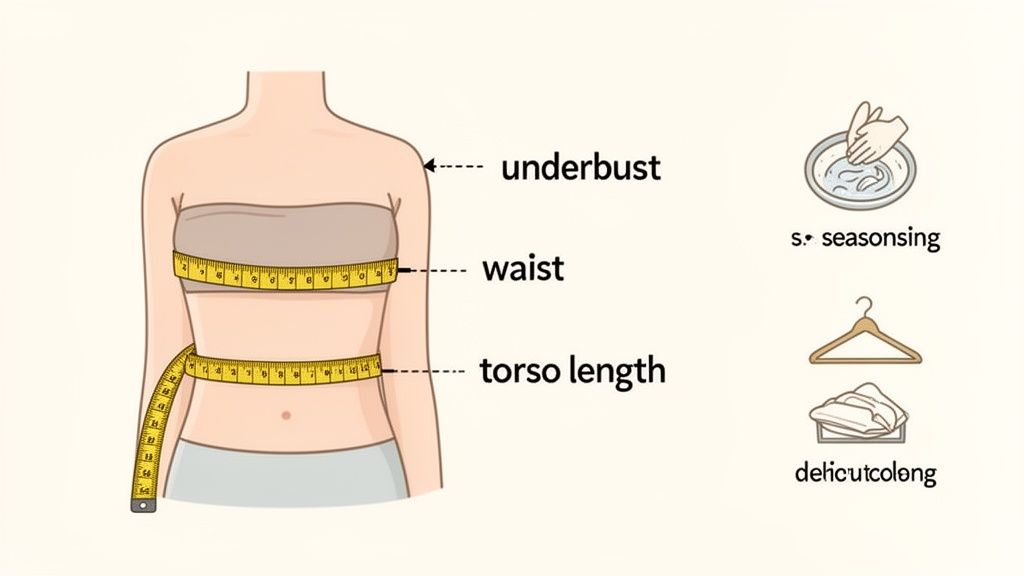
Whether you’ve landed on a corset or a waist trainer, getting the fit right is everything. It’s absolutely non-negotiable for comfort, safety, and seeing the results you want. An ill-fitting garment isn’t just useless; it can be seriously uncomfortable and even cause harm. Think of proper sizing and care as your insurance policy for getting the most out of your investment.
First thing's first: you have to take accurate measurements. Please don’t guess or just go by your t-shirt or dress size. These garments are constructed with precision, and your sizing needs to be just as precise.
Taking Your Key Measurements
To find that perfect, made-for-you fit, all you need is a flexible measuring tape and a minute of your time. Stand up straight but keep your body relaxed—no sucking in!—and make sure the tape is snug but not digging into your skin.
- Underbust: Measure right under your bust line, exactly where the band of your bra sits.
- Natural Waist: This one is crucial. Find the smallest part of your torso, which is usually an inch or two above your belly button.
- Torso Length: Sit down on a sturdy chair with your back straight. Measure the vertical line from your underbust down to the top of your thigh where it creases. This step ensures the garment won't be too long (and dig into your thighs) or too short (and create an awkward bulge).
With these three numbers in hand, you can confidently check them against the brand's size chart. Every single manufacturer is different, so never, ever assume you're the same size across different brands or styles. When it comes to the corset vs. waist trainer debate, sizing a steel-boned corset is often a bit more complex because its rigid structure demands a near-perfect match.
Breaking in Your New Garment
Just like a great pair of leather boots, both corsets and waist trainers need a "break-in" period. This initial phase is so important for letting the garment mold to your unique shape and for allowing your body to get used to the compression.
For waist trainers, it's pretty straightforward. Start slow, wearing it for just 1-2 hours a day for the first week or so. This gives the flexible material time to conform to your curves without feeling overwhelming. You can gradually add more time as you start to feel comfortable.
Corsets, on the other hand, require a more dedicated process called "seasoning."
Seasoning a corset is the art of wearing it loosely for short periods over one to two weeks. It allows the steel bones to gently warm and shape to your body's curves, creating a truly custom fit while protecting the fabric and seams from stress.
When you're seasoning a corset, you should only tighten the laces until it feels snug, not like it’s squeezing you. Rushing this process by lacing down too tightly and too soon is the fastest way to permanently damage your beautiful corset and cause yourself a lot of discomfort.
Preserving Your Investment with Proper Care
If you take good care of your garment, it will take good care of you for years to come. The specialized materials in corsets and waist trainers need specific cleaning and storage routines to maintain their shape and effectiveness.
Cleaning Your Garment:
- Waist Trainers (Latex/Neoprene): These are the easiest to clean. Simply hand wash them in cool water using a gentle, mild soap. Never, ever put them in a washing machine or dryer—the high heat will absolutely destroy the latex.
- Corsets (Coutil/Satin): Corsets should almost never be fully submerged in water. Your best bet is to spot clean any marks with a damp cloth. For a deep clean, it's worth taking it to a dry cleaner that has experience with delicate or structured garments like wedding dresses.
Storage Best Practices:
To help your garment keep its shape, storage is key. For a corset, loosely lace it up and either lay it flat or gently roll it. For a waist trainer, just lay it flat in a drawer. The one thing you want to avoid is folding either of them tightly, as this can create permanent creases and damage the boning or internal structure.
Your Top Questions, Answered
Jumping into the world of corsets and waist trainers can bring up a lot of questions, especially when it comes to daily wear. Getting it right is key to seeing the results you want, safely and comfortably. Let's tackle some of the most common questions we get from the Snatch community.
How Long Should I Wear My Waist Trainer Each Day?
When you’re just starting out, think of it as a new workout routine. Begin with just one to two hours a day. This gives your body time to get used to the compression.
As you feel more comfortable, you can slowly add more time. Many of our regulars wear theirs for up to eight hours for that all-day smoothing effect and back support, but the golden rule is simple: listen to your body. Never push through pinching or real discomfort.
How Tight Is Too Tight for a Corset?
A perfectly laced corset should feel like a firm, reassuring hug—not a painful squeeze. You should always be able to take a deep breath, sit down, and go about your day without feeling restricted.
When you're first "seasoning" a new steel-boned corset, tighten it just enough to feel secure and supported. The goal is consistent, gentle pressure that shapes over time, not forcing an instant change.
Our Pro Tip: A corset is tight enough when it feels snug and supportive. If you feel any sharp pinching, can't breathe easily, or have any pain, it's definitely laced too tightly. Loosen it up immediately.
Can I Sleep in a Corset or Waist Trainer?
We get this question a lot, and our answer is always a firm no. Sleeping in either a waist trainer or a corset is not a good idea.
Your body needs that time overnight to rest, repair, and breathe without any restriction. Constant compression while you sleep can mess with your breathing and circulation, which is both unsafe and unhelpful for your goals.
Which One Is Better for Postpartum Support?
First things first: always get the green light from your doctor before wearing any compression garment after giving birth.
Once you're cleared, many new moms love the feeling of a flexible waist trainer. It provides gentle, even compression that can help support recovering abdominal muscles and make you feel a bit more "held together." A rigid, steel-boned corset is usually far too restrictive for the delicate postpartum period. Always put comfort and your doctor's advice first.
Ready to find the perfect piece to help you reach your goals? Come explore our collections at Snatch Store US, where we have shapewear designed for every body and every single occasion. You can find your perfect fit and start feeling that next-level confidence today at https://snatchstore.us.
0 comments