
So, you’ve got your new waist trainer and you’re ready to go. The big question everyone asks is, "How long should I actually wear this thing?" It’s tempting to go all-in, but this is one of those times where slow and steady truly wins the race.
The sweet spot for most experienced users is between 6 to 8 hours a day. But let me be clear: that is not where you start. Think of it like breaking in a new pair of amazing (but stiff) leather boots. You wouldn't wear them for a 10-hour day right out of the box, right? Of course not. You’d wear them for an hour or two, let your feet adjust, and build up from there.
Your body needs that same gentle introduction to a waist trainer.
Your Guide to Safe Waist Trainer Wear Times
Getting your wear time right isn't about pushing through discomfort—it's about working with your body to get a great result safely. Pushing your limits too soon will only lead to frustration and maybe even a few angry red marks on your skin. We don't want that.
The goal is to let your body get used to the compression gradually. For anyone just starting out, we always recommend beginning with just 2-4 hours a day for the first week or so. This lets your body adapt without causing any issues like poor circulation or skin irritation. It’s a marathon, not a sprint! For a deeper dive into expert advice, you can always check out more info on daily shapewear use on shapewearusa.com.
Finding Your Perfect Schedule
Here’s the thing: there’s no magic one-size-fits-all schedule. Your body is unique, and your tolerance will be, too. How long you can comfortably wear your trainer really depends on a few key things:
- Your Experience Level: If you’re a total newbie, your wear time will be much shorter than someone who’s been waist training for months.
- The Trainer's Fit: A waist trainer that fits you like a glove will feel supportive and comfortable. One that’s too tight will feel awful pretty quickly.
- Your Daily Activities: You might wear it longer on a day you're sitting at your desk versus a day you're constantly on the move.
To make things a little easier, I’ve put together a quick reference table. Think of this as a starting point to help you find your own rhythm.
Waist Trainer Daily Wear Time Recommendations
This little guide is perfect for figuring out where you stand and what your next goal should be.
| User Level | Recommended Daily Hours | Key Considerations |
|---|---|---|
| Beginner | 2-4 Hours | Just focus on comfort! Your only job is to get used to the feeling of compression. |
| Intermediate | 4-6 Hours | You're comfortable and can easily wear it through a standard workday or for a special night out. |
| Advanced | 6-8 Hours | This is for seasoned pros who have gradually and safely built up their tolerance over time. |
Remember to always listen to your body. If something feels off, it's time to take a break. This journey is all about feeling confident and supported, not restricted.
Building Your Progressive Wearing Schedule
If you've just unboxed a brand-new waist trainer, your first instinct might be to wear it all day long. But hold on! Jumping straight into an eight-hour day is a recipe for discomfort and will probably just make you want to quit.
The real key to a great waist training experience is easing into it. Think of it like breaking in a new pair of amazing shoes; you start with just an hour or two at a time to let them mold perfectly to your feet. It’s the same idea here.
This gradual process is often called "seasoning," and it's a crucial step. It gives both your body and the garment time to get acquainted. The flexible steel boning and fabric will slowly start to conform to your unique curves, creating that perfect, supportive fit. Rushing this is easily the most common mistake beginners make, so let’s set you up for success.
Your First Week: The Acclimation Period
The first week is all about listening to your body. You're not trying to set any records here—you're simply getting used to the feeling of compression.
- Day 1-2: Start with just 1 to 2 hours. Wear it while you're relaxing at home or doing some light chores. Just see how it feels.
- Day 3-4: If everything feels good, go ahead and bump it up to 3 hours. You can even split this into two smaller sessions if you'd prefer.
- Day 5-7: Now, you can aim for about 4 hours of continuous wear. By the end of this week, the trainer should start to feel way more comfortable and natural.
A quick pro-tip: Rest is just as important as wear time. Make sure you give your body at least one full day off per week. This lets your skin breathe and your muscles relax.
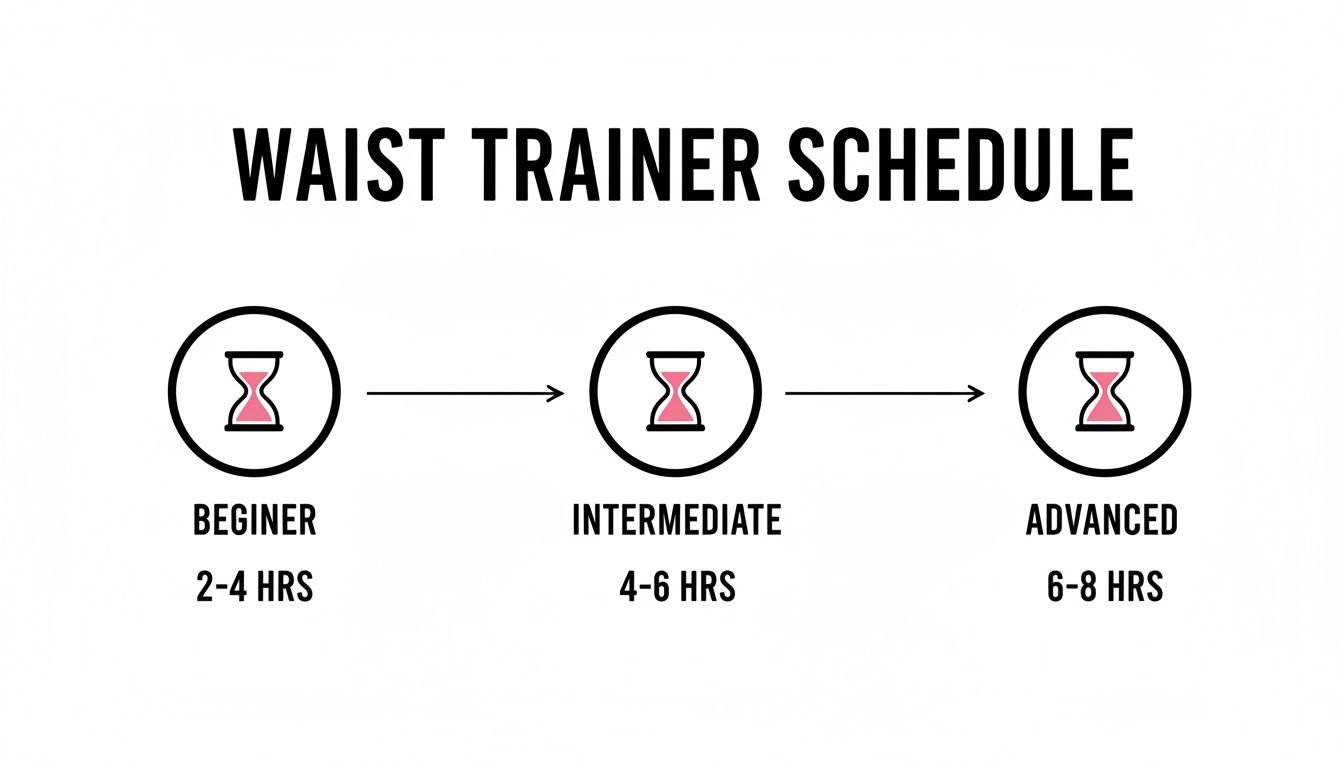
As you can see, the journey is all about that slow and steady progression from a couple of hours to a full day's wear.
Expanding Your Schedule: Weeks Two To Four
Once you’ve successfully seasoned your trainer during that first week, it’s time to start adding a bit more time. The strategy is simple: add small chunks of time every few days. This lets your body adapt smoothly without feeling strained or overwhelmed.
This is when you can really start weaving the waist trainer into your daily life—wear it to work, while you're out running errands, or whatever your day holds. A good rule of thumb is to add another 30 to 60 minutes every other day, as long as you feel great. For a deeper dive into the how-tos, our guide on how to use a waist trainer has some fantastic step-by-step advice.
Here’s what that might look like:
- Week 2: Work your way up from 4 hours to 5-6 hours per day.
- Week 3: Aim for 6-7 hours daily, and don't forget that rest day!
- Week 4 and Beyond: By now, you should feel totally comfortable wearing your trainer for a full 8-hour day.
This simple, structured plan is the best way to build up to the maximum recommended time safely and comfortably. It ensures your waist training journey is a positive one right from the start.
Understanding the Risks of Overwearing Your Waist Trainer
When it comes to waist training, it’s easy to think that more is more. But pushing the limits and wearing your trainer for too long can actually do more harm than good. It's so important to remember that more hours don't equal better or faster results. In fact, overwearing your waist trainer can introduce a whole host of health risks that completely undermine your goals.
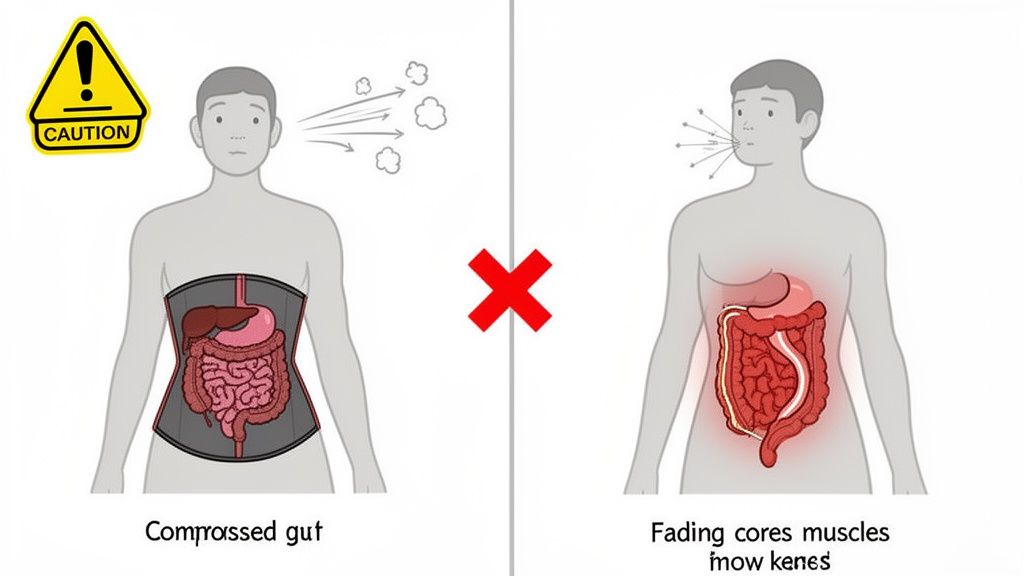
Think of it like a supportive brace. While it’s helpful for short periods, relying on it too much can teach your body’s natural support system—your core muscles—to get lazy. This isn’t just a theory; it’s a real thing called core muscle atrophy.
The Impact on Your Core and Digestion
Your core muscles are there to stabilize your spine and torso. But when a waist trainer does all the heavy lifting, these muscles don't have to engage, which can cause them to weaken over time. Overuse of waist trainers poses some well-documented risks, with some medical sources reporting that muscle atrophy can lead to back pain in 25-35% of consistent users. Doctors often advise limiting wear time to avoid this and other side effects.
Beyond your muscles, excessive compression can also wreak havoc on your digestive system. All that constant pressure on your abdomen can squeeze your internal organs, including your stomach, intestines, and esophagus.
This compression can lead to some really uncomfortable issues, like:
- Acid Reflux: Pressure on the stomach can push acid back up where it doesn't belong, causing that awful heartburn feeling.
- Indigestion and Bloating: When your intestines are squeezed, it can slow down digestion, leaving you feeling gassy and bloated.
- Constipation: Restricting the digestive tract's natural movement can also interfere with regular bowel movements.
It's important to understand the mechanics behind these garments, which work similarly to how shapewear creates a smooth silhouette. You can dive deeper into this topic in our article on how shapewear works.
Breathing and Circulation Concerns
For you to take a deep, healthy breath, your diaphragm needs to move freely. A waist trainer that's too tight or worn for too long can seriously restrict this movement. This leads to shallow breathing, which reduces your oxygen intake and can leave you feeling lightheaded or tired. Over time, it could even weaken your respiratory muscles.
Key Takeaway: The goal of waist training is to supplement your healthy lifestyle, not replace your body’s natural functions. Prioritizing safety by sticking to recommended wear times is non-negotiable for getting sustainable results without compromising your well-being.
Finally, your circulation can also take a hit. While a properly fitted trainer shouldn't cut off blood flow, one that’s way too tight can impede circulation to your organs and lower body. This is exactly why listening to your body and never, ever ignoring signs of discomfort is so vital.
Recognizing When It Is Time to Take a Break
While a progressive schedule is your roadmap, the number one rule of waist training is simple: listen to your body.
Think of your waist trainer as a workout partner. It’s there to support you and help you push your limits safely, but it should never cause actual pain. Learning to recognize the signals your body sends is the most important part of a safe and successful journey. If you ignore them, a supportive tool can quickly turn into a source of harm.
Your body will always let you know when something isn't right. The trick is knowing what to listen for and acting on it immediately. Even what feels like mild discomfort can become a bigger problem if you just "push through it," so treat these signs as your body's way of asking for a time-out.
Physical Discomfort and Pain Signals
Pain is your body’s built-in alarm system. Never, ever ignore it. It's vital to learn the difference between the firm, reassuring hug of compression and genuine pain.
Here are the red flags that mean it's time to take your trainer off, right now:
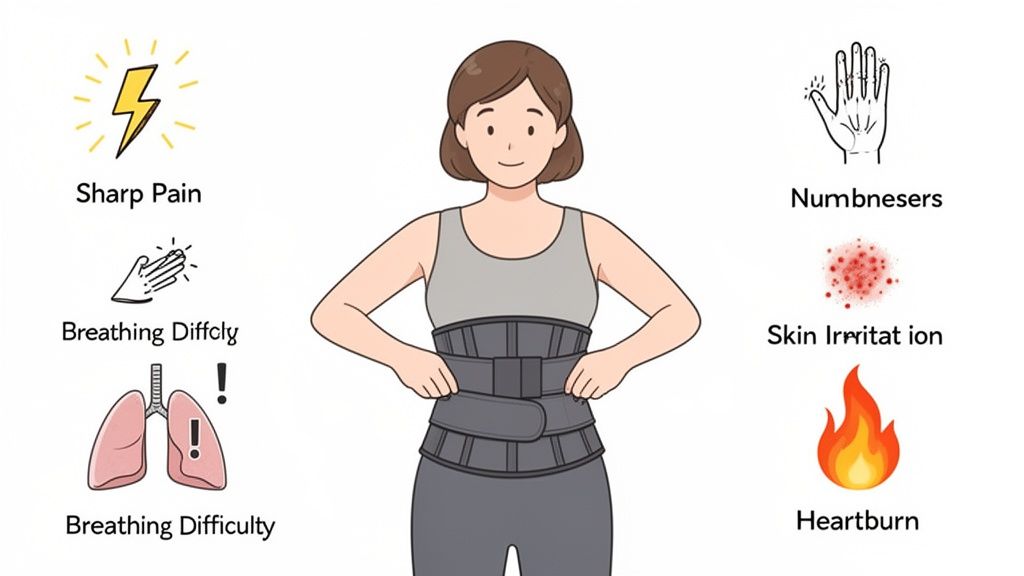
- Sharp or Pinching Pain: This is a classic sign that the trainer is cinched way too tight or the boning is digging into your ribs or hips. This isn't something to tough out—it's a mechanical issue.
- Numbness or Tingling: If you feel "pins and needles" in your stomach, back, or legs, it’s a major warning. This suggests the compression is messing with nerve function or blood flow, which is a serious no-go.
- Bruising: Don't confuse slight red marks (which are normal and should fade fast) with actual bruises. Bruising means the garment is causing trauma to the tissue underneath.
Your waist trainer should feel like a firm, supportive hug—never a painful squeeze. If you experience any of these symptoms, your body is screaming that the pressure is too much. Loosen it immediately or, better yet, take it off for the rest of the day.
Breathing and Digestive Warnings
Your ability to breathe properly and digest your food is completely non-negotiable. If your waist trainer gets in the way of either, it's a clear signal to stop.
Keep an eye out for these warnings:
- Shortness of Breath: Can't take a full, deep belly breath? Your trainer is definitely too tight. Shallow breathing starves your body of oxygen and can leave you feeling dizzy and tired.
- Heartburn or Acid Reflux: All that pressure on your abdomen can push stomach acid back where it doesn't belong. If you suddenly start feeling the burn, your trainer is almost certainly the culprit.
- Persistent Skin Irritation: A little chafing can happen at first, but if you develop a rash, hives, or broken skin, your skin needs a serious break. This could be an allergic reaction to the material (like latex) or the result of friction and trapped moisture. Keeping your trainer and your skin clean is key to preventing this.
Setting Realistic Long-Term Expectations
Let’s be real for a moment: waist training is a journey, not a magic trick. It's so important to understand the difference between the incredible hourglass figure you get the moment you put on your trainer and the semi-permanent results that come from long-term, consistent dedication.
Think of it like this: wearing your trainer for a night out is like styling your hair. It looks absolutely fantastic for the event, but the next morning, you have to do it all over again. Consistent, long-term waist training is more like a gentle, progressive treatment that slowly encourages your body to remember that beautifully defined shape over time.
This process is all about patience and consistency. The results you're aiming for are cumulative—built day by day, week by week, through safe and steady wear.
Timelines for Visible Changes
So, how long does it really take to see changes that stick around? While every single body is unique, most people who are truly dedicated to the process start noticing visible, semi-permanent adjustments after about three to six months of consistent use. And I mean consistent! This isn't just about wearing the trainer; it's about pairing it with a healthy diet and regular exercise.
These three elements—your waist trainer, your nutrition, and your fitness routine—are a team. They work together to create the best possible outcome. If you neglect one, it's almost guaranteed to slow down your progress with the others.
One of the biggest myths out there is that tighter is better or wearing it longer gets you there faster. The truth? Consistency is far more important than intensity. Wearing your trainer safely for six hours every day is so much more effective than struggling through a painful ten-hour day only to skip the next three because you're sore.
For instance, one 12-week study showed an average drop in waist circumference of nearly 2 cm, which proves that gradual, consistent use really does yield measurable results. While some incredibly dedicated individuals have reported more dramatic changes (like a four-inch reduction over several months), others might need a year or more for subtler shifts to take hold. You can get a much more detailed breakdown by checking out this deep dive into waist training results on lucycorsetry.com.
Factors That Influence Your Results
It’s crucial to remember that your personal timeline will be completely your own. A few key factors play a huge role in how quickly you'll see changes and what kind of results you can realistically expect.
- Genetics and Starting Body Shape: Your natural bone structure and body composition are your unique starting point. It’s just a fact that some body types will adapt to a more defined waistline faster than others.
- Lifestyle and Diet: A balanced diet and an active lifestyle are absolutely non-negotiable. Your waist trainer is there to support your efforts, but it can't outwork poor nutrition or a completely sedentary routine.
- Consistency of Wear: This is the one you have the most control over. Sticking to your progressive wearing schedule without taking long breaks is what builds momentum and delivers those long-term changes you're looking for.
At the end of the day, setting realistic expectations is about understanding that this is a marathon, not a sprint. Celebrate the small victories, trust the process, and listen to what your body is telling you every step of the way.
Choosing the Right Waist Trainer for Comfort and Safety
Let’s be honest—how long you can actually wear your waist trainer all comes down to the one you choose. A poorly made or ill-fitting garment isn’t just uncomfortable. It can actively sabotage your goals by causing pain, chafing, or even breathing issues that force you to rip it off halfway through the day.
A great waist training experience starts with the right foundation. Think of it like a good pair of running shoes. You wouldn't even attempt a marathon in heels, right? The same logic applies here. The perfect fit gives you that firm, consistent compression that feels like a supportive hug, not a restrictive cage, allowing you to wear it for the hours you need to see results.
How to Find Your Perfect Fit
This is the most critical step, and there’s no room for guesswork. Forget your dress size—it’s time to grab a measuring tape.
- Find Your Natural Waist: This is the smallest part of your torso, usually about an inch or two right above your belly button.
- Use a Soft Measuring Tape: Wrap the tape around your waist, keeping it flat and parallel to the floor. You want it to be snug, but not digging into your skin.
- Relax and Measure: Breathe out normally and jot down the number. This is your magic number for finding the perfect size on a brand’s chart.
A huge mistake we see all the time is sizing down, thinking it will somehow fast-track results. This is a dangerous myth. A trainer that’s too tight is not only painful but can damage the garment itself and put your health at risk. Always, always trust the manufacturer's size guide.
Understanding Materials for All-Day Comfort
The fabric of your trainer is everything. It dictates breathability, flexibility, and how intense the compression feels, which all play into how long you can comfortably wear it.
- High-Compression Latex: This is the powerhouse material. It gives you maximum shaping and really turns up the heat during workouts. But, because it’s less breathable, it can feel a bit intense for a full 8-hour workday.
- Breathable Cotton or Spandex Blends: These fabrics are your best friends for long-term wear. Often used for linings or in more flexible trainers, they’re much kinder to your skin. They wick away moisture and seriously cut down on the risk of irritation.
If you want to dive deeper into all the different styles out there, our guide on the best waist trainer for women can help you find your perfect match. At the end of the day, the best trainer is the one you can wear safely and consistently without even thinking about it.
Your Top Waist Training Questions, Answered
Alright, let's talk about the nitty-gritty. Once you start waist training, a bunch of practical questions always pop up. It’s completely normal, and getting clear answers is key to doing this safely and getting the results you want.
Think of this as your personal FAQ session. We’ve heard these questions from so many women in our community, so let's clear up the confusion and get you on the path to confidence.
Can I Wear a Waist Trainer While I Sleep?
This is a big one, and the answer is a firm no. Your body needs to fully rest and recover overnight, and wearing a compression garment can get in the way of that. It can restrict your breathing and circulation when you’re lying down for hours.
Sleep is for restoration, not compression. Let your body do its thing without any constraints.
How Long Should I Wear a Waist Trainer During a Workout?
When it comes to the gym, think of your waist trainer as a temporary workout buddy, not an all-day accessory. Keep it on for the duration of your exercise session, which is typically 1-2 hours at most.
It’s great for creating a little extra heat and giving your back some solid support during lifts. Just make sure it’s not cinched so tight that you can't breathe deeply or move properly. Your form and safety always come first!
Key Reminder: Daily waist training is a long-term commitment. It’s about consistently wearing a trainer to gradually shape your waist. This is totally different from grabbing shapewear for a one-off event.
Shapewear is your secret weapon for a special occasion—like a wedding or a big night out. You slip it on for an instant smoothing effect under a specific outfit for maybe 8-10 hours. It’s for a temporary look, not a long-term training journey.
Ready to find a waist trainer that feels like it was made for you? One that supports your goals without compromising on comfort? Check out the collection we’ve put together at Snatch Store US.
0 comments