
Getting a snatched waist isn't just about putting on a trainer; it’s about starting with the right one. Your success story begins the moment you choose a waist trainer that's built for your body and your life, not just one that looks cute online. Nailing this first step is everything—it's the difference between a comfortable, empowering journey and a frustrating one.
Choosing the Right Waist Trainer for Your Body
Finding your perfect waist trainer is all about function and fit, not just aesthetics. The material, style, and—most importantly—the size are what will truly shape your experience and your results. In my experience, this is where most people go wrong. They pick the wrong size or style and end up uncomfortable, which is the number one reason they give up.
Finding Your Perfect Material and Style
The fabric of your trainer makes a huge difference. A sturdy latex trainer, for instance, is a powerhouse for workouts. It cranks up the heat around your core, making you sweat more for that extra thermal action.
But for all-day wear at the office? A breathable, cotton-lined trainer is your best friend. It gives you that firm compression you want without trapping heat or moisture, keeping you comfortable for hours.
Your lifestyle is the ultimate guide here. Do you need a discreet cincher to wear under your work clothes, or are you looking for a more structured corset for a special event? Each is designed for a completely different job. To get a better feel for what’s out there, check out our complete guide on the best waist trainer for women to see which styles match your personal goals.
A common mistake is thinking all waist trainers are the same. A workout trainer has a rigid structure to support your posture during a tough gym session, while an everyday cincher is built with more flexibility so you can sit, move, and live comfortably.
How to Get the Sizing Exactly Right
Listen up, because this is the most critical part. A trainer that doesn't fit right isn't just useless—it can be downright painful. To get your perfect size, you have to measure your natural waistline. That’s the narrowest part of your torso, usually about an inch above your belly button.
Grab a flexible measuring tape and wrap it around your waist. Make sure it’s snug, but not digging into your skin. For the most accurate number, take the measurement right after you exhale.
This number is your starting point. From here, the general rule is to choose a trainer that measures 4-5 inches smaller than your natural waist. This gives you that ideal compression without making you feel like you can't breathe. For a deeper dive into how sizing works around the world, you can check out this waist trainer popularity report.
The goal is to feel a firm, supportive hug—not like you're in a vise. When you get the size right, your trainer will feel secure and compressive, instantly smoothing your silhouette without any pinching, pain, or breathing issues. Taking a few minutes to measure correctly is the best thing you can do to set yourself up for success from day one.
How to Put on Your Waist Trainer Correctly
Getting your waist trainer on for the first time might feel like a mini-workout, but trust me, a few little tricks make all the difference. Nailing the technique from the start is the key to getting that smooth, sculpted look you’re after without any of the struggle. It’s all about working with the garment, not fighting it.
First, wrap the trainer around your middle, making sure the bottom edge rests comfortably just above your hips. If your trainer has hook-and-eye closures—and most do—here’s the single best tip you'll ever get: start fastening from the bottom hook and work your way up. This anchors the whole thing in place and gives you the leverage you need to close the rest of the hooks without a battle.
Securing the Perfect Fit
With that bottom hook secured, gently bring the two sides of the trainer together as you move up the line of hooks. You’ll want to be standing up straight, keeping your core muscles lightly engaged. Think of it as guiding the fabric into place, not yanking it.
There's a reason this bottom-up method is everywhere. You’ve probably seen it on Instagram or TikTok, where everyone from the Kardashians to your favorite fitness influencers shows off how to pull the hooks tightly from the bottom for perfectly even pressure. It really does work.
Of course, putting it on is only half the story. Choosing the right trainer in the first place is what sets you up for success.
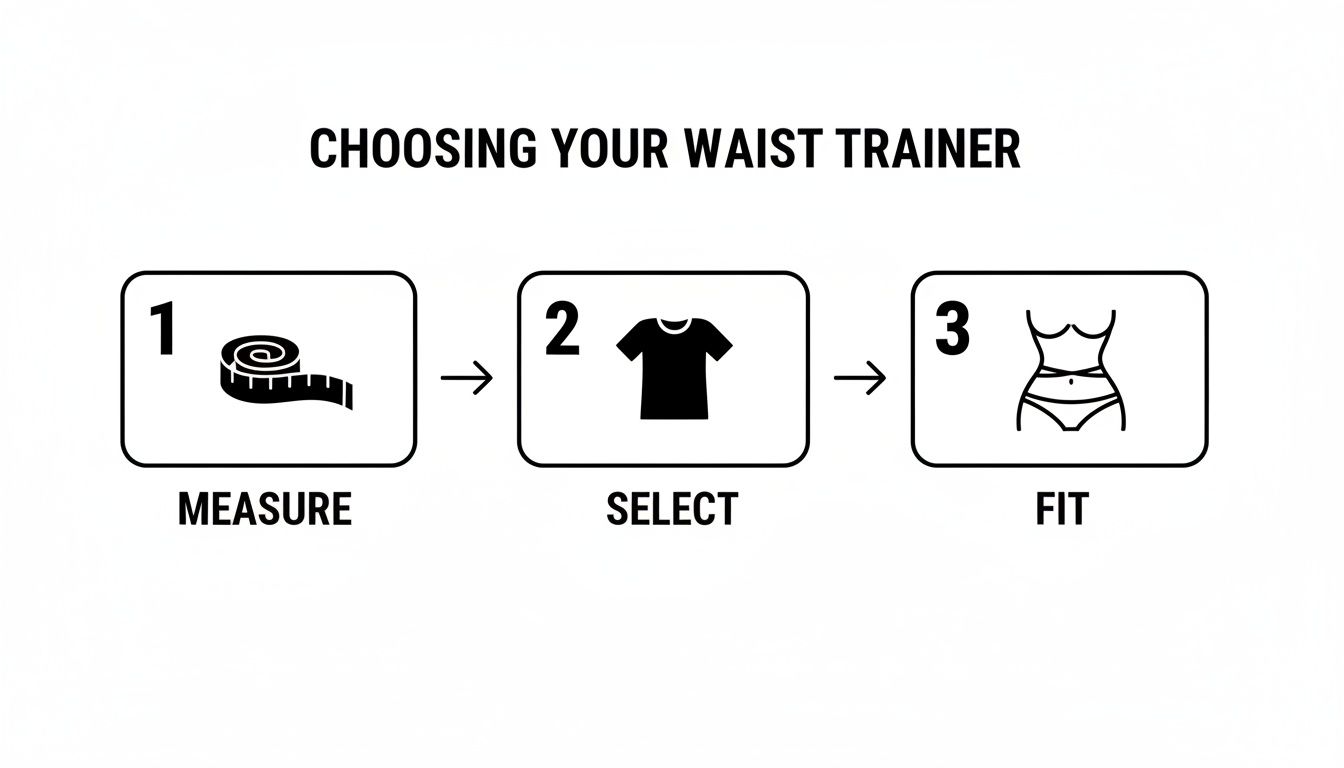
As you can see, a great result always starts with getting your measurements right. That leads to picking the perfect trainer, which then allows you to get that ideal fit.
Adjusting for Comfort and Silhouette
Your waist trainer should feel snug and supportive—like a firm, reassuring hug. It should never, ever feel painful or make it hard to breathe. If you’re feeling any pinching or you can't take a decent breath, it’s definitely too tight. A well-fitted trainer will smooth your figure without creating any bulges above or below the garment.
Key Takeaway: The goal is compression, not constriction. You should be able to go about your day without feeling breathless or in pain. If it feels wrong, it probably is.
Once it's on, take a second to adjust it. Give it a gentle tug downward so it settles naturally on your torso. For a deeper dive into the science behind this smoothing magic, check out our article on how shapewear works. These tiny adjustments are what ensure the garment lies flat under your clothes for that flawless, seamless finish.
Your Gradual Wearing Schedule for Safe Results
Let’s be real: jumping straight into wearing a waist trainer for eight hours on day one is a huge mistake. I can't stress this enough. Think of it like breaking in a new pair of stiff leather boots; your body and the garment both need time to get acquainted and adjust.
This "breaking-in" period, which some people call "seasoning," is the absolute secret to getting comfortable and seeing results without overwhelming yourself. Forcing it on for too long, too soon, is the fastest way to get discouraged by pinching, unnecessary discomfort, and even bruising. The goal here is a slow, comfortable progression that lets your body adapt to the compression safely.
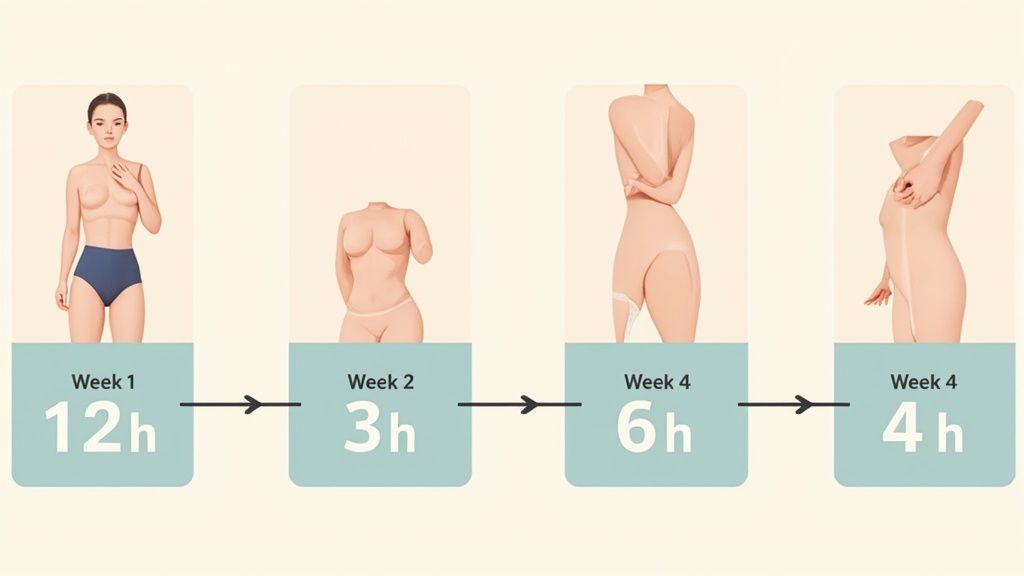
Building Your Tolerance Week by Week
When you're first figuring out how do you use a waist trainer, remember that consistency is so much more important than intensity. A slow and steady approach is what ensures your body gets used to the sensation of being compressed without causing any distress.
Here’s a sample schedule to get you started. Think of it as a template—the most important thing is to adjust it based on your own comfort levels.
- Week 1: Start with just 1 to 2 hours a day. The only goal here is to get used to the feeling. Wear it while you’re doing something low-key, like working at your desk or watching TV.
- Week 2: If the first week felt totally fine, it's time to bump it up to 3 to 4 hours daily. You might start noticing that your posture feels more supported, which is a great little bonus!
- Week 3: Now you can try aiming for 5 to 6 hours per day. By this point, the trainer should feel much more natural, almost like a secure, supportive hug around your midsection.
- Week 4 and Beyond: You’re ready to work your way up to 8 hours if that's your goal. Most experienced wearers find this is the sweet spot for comfortable, all-day wear.
Crucial Tip: Never, ever sacrifice comfort just to go faster. This schedule is a guideline, not a strict rule. If you feel any sharp pain, significant shortness of breath, or numbness, take the trainer off immediately. Your body's signals are your most important guide.
Recognizing the Signs You’re Overdoing It
Listening to your body is completely non-negotiable. It will always tell you when you're pushing things too far or too fast. Pay close attention to these warning signs and take them seriously.
Here are the most common indicators that you need to loosen your trainer or just take a break:
- You're having trouble taking a full, deep breath.
- You feel sharp pinching or digging from the boning.
- There's any numbness or tingling on your torso.
- You see red marks on your skin that don't fade soon after you take it off.
If you experience any of these, don't just "power through it." Loosen the garment or take it off for the day. You can always try again tomorrow for a shorter period. This journey is a marathon, not a sprint, and respecting your body's limits is the only way to get there.
Pairing Your Waist Trainer with Your Fitness Routine
Let’s clear up a common myth right away: a waist trainer isn't a magic shortcut to your fitness goals. Think of it as a powerful companion to an active, healthy lifestyle—something designed to amplify the results of your hard work, not replace it.
When you wear one during a workout, it provides amazing postural support and ramps up the thermal activity around your core. You’re going to sweat more. A lot more.
This increased sweat is a huge perk for many people, but it also makes proper hydration completely non-negotiable. Because of the compression and heat, you can lose water much faster than you’re used to. Make sure you’re drinking plenty of water before, during, and after your workout to stay hydrated and keep your energy where it needs to be.
The Best Workouts to Do in a Waist Trainer
Pairing your waist trainer with the right kind of exercise is everything. You want movements that are enhanced by the extra support, not hindered by it.
For the best results, stick to activities that really benefit from a stable core and an upright posture. Here are a few great examples that work beautifully with a waist trainer:
- Steady-State Cardio: Think brisk walking on the treadmill, hitting the elliptical, or going for a spin on a stationary bike. The trainer helps you maintain great form, which can seriously cut down on fatigue.
- Weightlifting: When you’re doing big lifts like squats, deadlifts, or overhead presses, the trainer is like an external reminder to keep your back straight and your core tight. It can be a game-changer for your lifting posture.
- Low-Intensity Activities: Even just walking the dog or doing chores around the house while wearing your trainer helps. It keeps encouraging that good posture and keeps your core muscles engaged throughout the day.
This kind of consistency really pays off. A 2023 survey found that 62% of U.S. users saw a visible reduction in their waist measurement after just four weeks of wearing their trainer for 6-8 hours during workouts. You can dig into the full waist trainer market findings to see more of the trends.
Workouts to Skip When Wearing Your Trainer
Knowing what not to do is just as important. The structure of a waist trainer is firm for a reason, but that means it restricts how much you can bend and flex your torso.
Safety First: You should never, ever feel like you can't breathe deeply or fully engage your abs. If an exercise feels weird, unnatural, or restricted, take the trainer off. It's that simple.
You’ll want to avoid any exercise that requires you to bend sharply at the waist or do any kind of deep ab crunch. That means things like:
- Crunches and Sit-Ups: These are a definite no-go. Your abdominal wall needs to flex and contract for these movements, and a waist trainer physically blocks that from happening.
- Intense Core Work: Exercises like Russian twists or certain Pilates moves just aren’t compatible. The trainer will get in the way of your form and prevent your muscles from doing the work.
- High-Intensity Interval Training (HIIT): When you're doing intense cardio bursts, you need to take deep, rapid breaths. A waist trainer's restrictive nature makes that pretty difficult and unsafe.
Ultimately, your waist trainer is a tool for support and posture enhancement during specific activities—it’s not armor for every workout on the planet. Always listen to your body and prioritize safe, effective movement. That’s how you’ll get the absolute best results from both your fitness routine and your waist training journey.
Let’s Talk About What Not to Do: Common Mistakes and Safety
When you’re excited to see that hourglass shape, it’s easy to get a little carried away. But using a waist trainer incorrectly won’t just slow you down—it can be risky. Getting that sculpted silhouette should never, ever come at the cost of your health.
The biggest mistake we see? Choosing a size that’s way too small, thinking it’ll deliver faster results. That’s a total myth, and a dangerous one. A trainer that’s painfully tight can restrict your breathing, dig into your skin, and cause some serious internal discomfort. The goal is firm, supportive compression, not a feeling of being crushed.

Red Flags: When Your Body Is Telling You to Stop
Your body is incredibly smart. It sends you signals when something isn’t right, and learning to listen is the most important part of your waist training journey. Let’s be clear: pain is not progress. It’s your body’s alarm bell, and it’s time to take the trainer off.
Keep an eye out for these warning signs:
- Skin Problems: Are you seeing red marks that don't fade, chafing, or even bruises? That's a clear sign the trainer is either too tight or you've had it on for far too long.
- Sharp Pains: Any sudden pinching or jabbing sensations are a major red flag. This could be a steel bone digging in or a sign the fit is just plain wrong for your body.
- Heartburn or Acid Reflux: The compression on your stomach can sometimes trigger or worsen acid reflux. If you feel that familiar burn, loosen your trainer immediately.
- Numbness or Tingling: If any part of you starts to feel numb or tingly, take the trainer off. This means it’s likely messing with your circulation.
Ignoring these signals can lead to bigger problems. In fact, safety data has shown that improper use led to a 15% increase in minor issues like bruising in just one year, which is why so many brands are getting serious about detailed usage guides. You can actually see some fascinating data about global waist trainer trends on yourwaisttrainer.com.
The Golden Rule: Never, ever sleep in your waist trainer. Your body needs to rest and recover overnight without any restriction. The same goes for wearing it right after a big meal—give your digestive system some space!
Simple Usage Errors to Avoid From Day One
Beyond listening to your body, a few common slip-ups can make your experience uncomfortable or unsafe. Sidestep these, and you’ll be on the right track.
A big one is wearing the trainer directly on your bare skin. For hours on end, this is a recipe for chafing and rashes. Always wear a thin, breathable layer underneath, like a simple cotton camisole or tank top. It acts as a protective barrier and makes everything more comfortable.
Also, resist the temptation to wear it around the clock. Your muscles, your skin, and your core all need a break from constant compression. The safest and most effective approach is to stick to a gradual wear schedule and never go over eight hours a day.
Got Questions? We’ve Got Answers
Starting something new always comes with a few questions, and waist training is no exception. Getting the right info is the key to feeling confident and safe as you start this journey. Let's walk through some of the most common questions we get from our community.
Can I Wear My Waist Trainer All Day Long?
While you might see experienced users wearing their trainers for around eight hours a day, that's a goal to work toward, not a starting point. If you're new to this, think slow and steady.
Start with just one to two hours a day. Let your body get used to the feeling. As you feel more comfortable, you can gradually add a little more time each day.
One thing is non-negotiable: never, ever wear your waist trainer to sleep. Your body needs that time to rest and recover without any restriction. Wearing it overnight can mess with your breathing and circulation, so just don't do it. Always listen to your body—if you feel any sharp pain, numbness, or shortness of breath, take it off immediately.
Think of it this way: a waist trainer should feel like a firm, reassuring hug, not a restrictive vise. Pain is your body’s signal to stop, not to push through it.
How Do I Keep My Waist Trainer Clean?
Taking good care of your trainer is a must. It keeps it hygienic (especially if you're sweating in it!) and helps it last a whole lot longer. The best way to clean it is to hand-wash it in cool water with a very gentle soap.
Seriously, keep it out of the washing machine and dryer. The intense spinning and high heat will absolutely destroy the latex, bend the boning, and ruin the structure of the garment. It's a fast track to a misshapen trainer.
Here’s a super simple routine to follow:
- Fill a sink with cool water and just a drop or two of mild soap.
- Submerge the trainer and gently wash it with your hands.
- Rinse it really well with cool water until the soap is all gone.
- Gently squeeze out the extra water—do not wring or twist it!
- Lay it flat on a towel or hang it over a shower rod to air dry. Make sure it's away from direct sunlight.
Will a Waist Trainer Help Me Lose Belly Fat?
Let’s be real here: a waist trainer itself doesn't magically melt fat away. That instant hourglass shape you see comes from compression—it's physically holding and smoothing your midsection. Any "weight" you lose right after taking it off is usually just water weight from sweating. We dive deeper into this in our article exploring what waist trainers are for and how they actually work.
True, lasting fat loss comes down to the basics: a healthy diet and consistent exercise. There are no shortcuts. A waist trainer is an amazing motivational tool. It supports your posture and can help you feel more "pulled together" during your fitness journey, but it’s a partner to your efforts, not a replacement for them.
Can I Hide It Under My Clothes?
Of course! That’s what they’re designed for. Modern waist trainers are made to be seamless and discreet, so you can wear your favorite outfits without anyone knowing your secret.
Want to make it even more invisible? Here's a pro tip: wear a thin, fitted camisole or tank top between your skin and the trainer. This little trick not only prevents any skin irritation but also creates a smooth buffer that helps the trainer lie perfectly flat under your clothes. In North America, where the market commands 35% of the global share, many users wear their trainers for 8-12 hours a day, often pairing them with cardio to boost results while keeping them totally hidden. You can find more cool stats about the global waist trainer market on researchintelo.com.
Ready to find the perfect foundation for your silhouette? Explore the curated collection of high-quality shapewear at Snatch Store US and discover the confidence that comes with a flawless fit. Find your perfect match today at https://snatchstore.us.
0 comments